Farm Country: What’s Growing Around Lethbridge
Drive five minutes out of Lethbridge and you’re in some of the busiest farm country in Canada. Here’s how to tell what’s in the field, when it happens, and why it matters so much to all of us.
A short, plain guide for families, kids and newcomers: the crops you’ll see from the road, the farm year, irrigation, feedlots, dairy, hogs, poultry and bison, and what to expect when the big machinery is out at harvest.
On this page
What’s that field? Crops to spot
These are the crops you’re most likely to see around Lethbridge, based on what Alberta’s irrigation districts grow and what dryland farms in the south plant. Wheat, canola and corn for cattle feed cover the most ground.
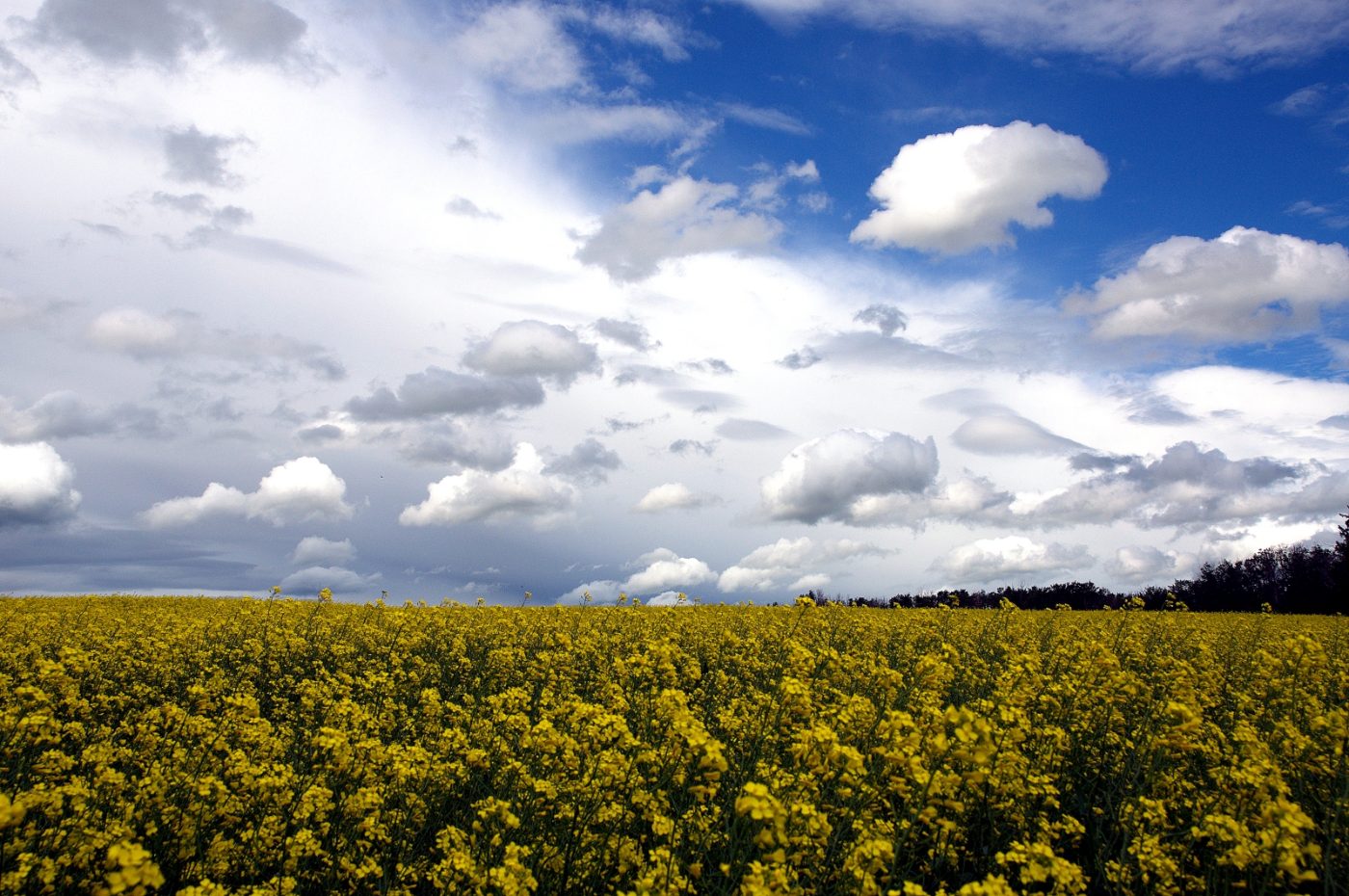 Photo: Darren Kirby, CC BY-SA 2.0
Canola
Look for: fields of bright yellow flowers in midsummer. Later the crop turns green, then is often cut into long rows (“swaths”) to dry before it’s combined.
When: seeded in May, harvested August to September.
Becomes: cooking oil and margarine. The seeds are about 43% oil, and what’s left feeds livestock. Canola is a Canadian invention.
Wheat (spring and durum)
Look for: green fields that turn golden in late summer, with heads of grain at the top of each stem.
Two kinds: spring wheat for bread and baking, and durum, which becomes pasta. Most durum is grown on dryland farms.
Did you know? Wheat is the biggest crop in Alberta’s irrigation districts.
Barley
Look for: heads with long whiskers (called awns) that give the field a soft, silky look in the wind.
Becomes: cattle feed (barley is the main feedlot grain in Alberta) and malt. Some is cut green for silage.
Did you know? Alberta grows more barley than any other province.
Corn
Look for: the tallest crop around, in straight rows.
Two kinds: silage corn is chopped up whole while still green to feed cattle; grain corn is left to dry. And there’s Taber’s famous sweet corn.
Water: corn needs about 500 mm of water a season, more than our rain gives, so it’s irrigated.
Alfalfa and hay
Look for: leafy green fields cut low, then rows of drying hay and stacks of bales.
When: irrigated alfalfa is cut about three times: late June, early August and early October.
Becomes: hay for cattle, dairy cows and horses. Some fields are grown for seed.
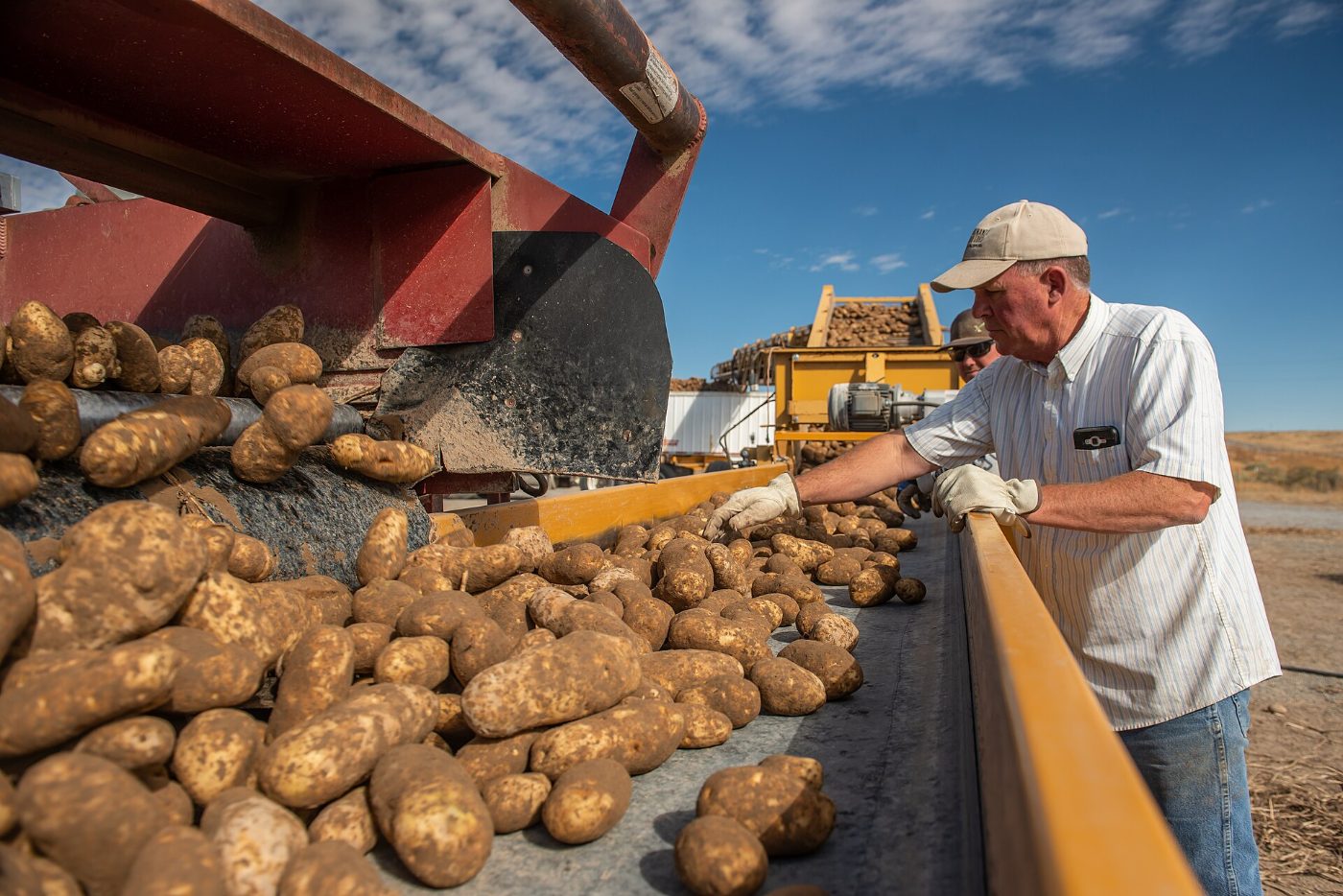 Photo: USDA, public domain
Potatoes
Look for: long, neat rows of bushy plants growing on raised ridges.
When: dug in September and early October.
Becomes: mostly french fries and chips. Alberta grows more potatoes than any other province, and much of the crop for processing is grown around Taber and Lethbridge.
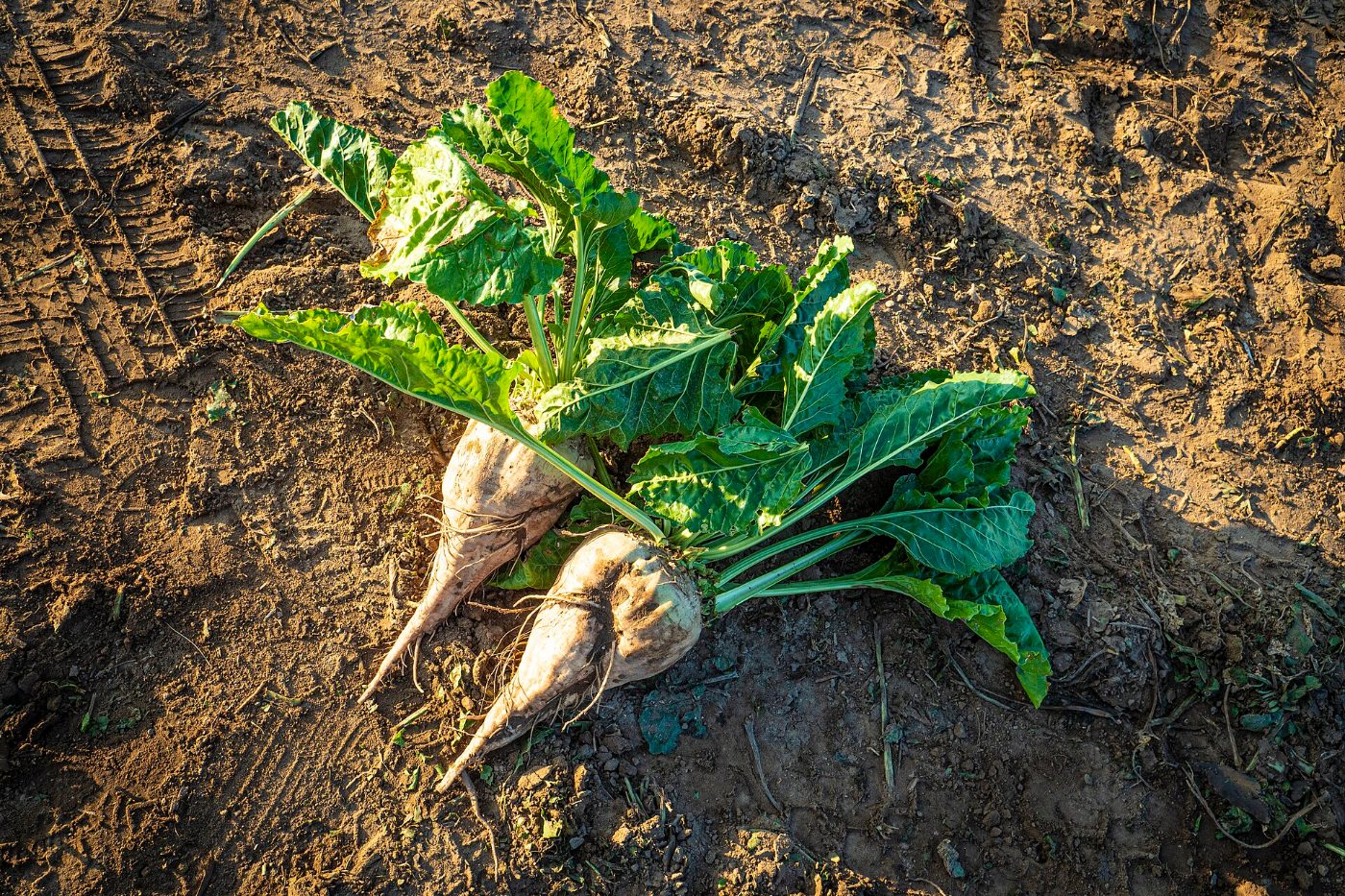 Photo: USDA, public domain
Sugar beets
Look for: low rows of big, broad leaves close to the ground.
When: seeded from early spring to the end of May, harvested from September into November.
Becomes: white sugar, made at the sugar factory in Taber, which opened in 1950. Every beet field here is irrigated.
Dry beans and peas
Look for: low, bushy green fields.
Beans: pinto and great northern beans need irrigation here.
Peas: grown on both irrigated and dryland farms. Peas, beans and lentils are “pulses,” full of protein.
You might also spot
Smaller fields of triticale (a cross of wheat and rye), flax, oats, hemp, mustard, sunflowers, lentils and chickpeas. Southern Alberta also grows dozens of specialty and seed crops.
The farm year around Lethbridge
| Season | What’s happening in the fields |
|---|---|
| Spring (April to May) | Seeding. Tractors and air seeders everywhere. Canola goes in during May, and sugar beets are in by the end of May. |
| Summer (June to July) | Everything’s green. Irrigation pivots run, the first hay is cut in late June, and canola turns the countryside yellow. |
| Harvest (August to October) | Combines roll. Harvest gets going in August, and most grain in the south is usually in by early October. Potatoes are dug in September and October, and the last hay is cut. |
| Late fall (September to November) | Sugar beet harvest, with trucks hauling beets to the factory. |
| Winter | Feedlots and dairies stay busy every day of the year, and farmers fix machinery and plan next year’s crops. |
Irrigated or dryland?
Lethbridge gets only about 375 mm of rain and snow a year. That’s semi-arid. So southern Alberta farms come in two kinds:
- Dryland farms rely on rain and the moisture stored in the soil. They mostly grow wheat (especially durum), canola, barley and peas.
- Irrigated farms get extra water from mountain rivers, which lets them grow higher-value crops that need more water: potatoes, sugar beets, corn, dry beans and seed crops.
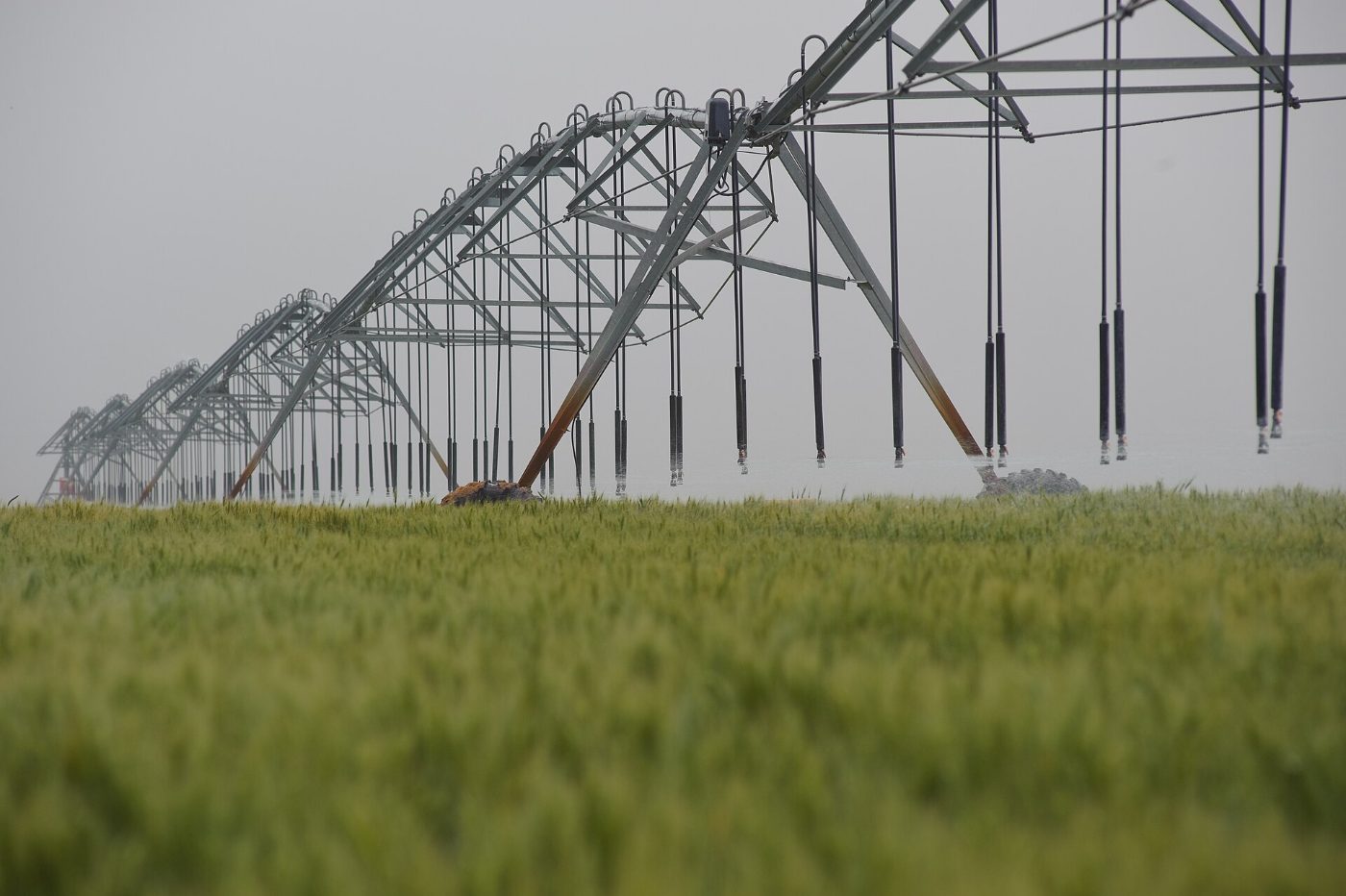
The water comes from the Bow, Oldman, Belly, Waterton and St. Mary rivers. It’s stored in reservoirs and carried out to farms in a long network of canals. Those big circles of green you see from a plane or on a map? They’re centre pivots: long sprinkler arms on wheels that turn slowly around a point in the middle of the field.
For more on how a dry prairie became one of Canada’s great food regions, see How a dry prairie feeds a country.
Feedlots: intensive cattle operations
Lethbridge County is often called “Feedlot Alley.” A feedlot (the official term is a confined feeding operation, or intensive cattle operation) is a farm where cattle live in pens and are brought their feed, instead of grazing on pasture. Young cattle come in from ranches and are fed until they’re ready for market.
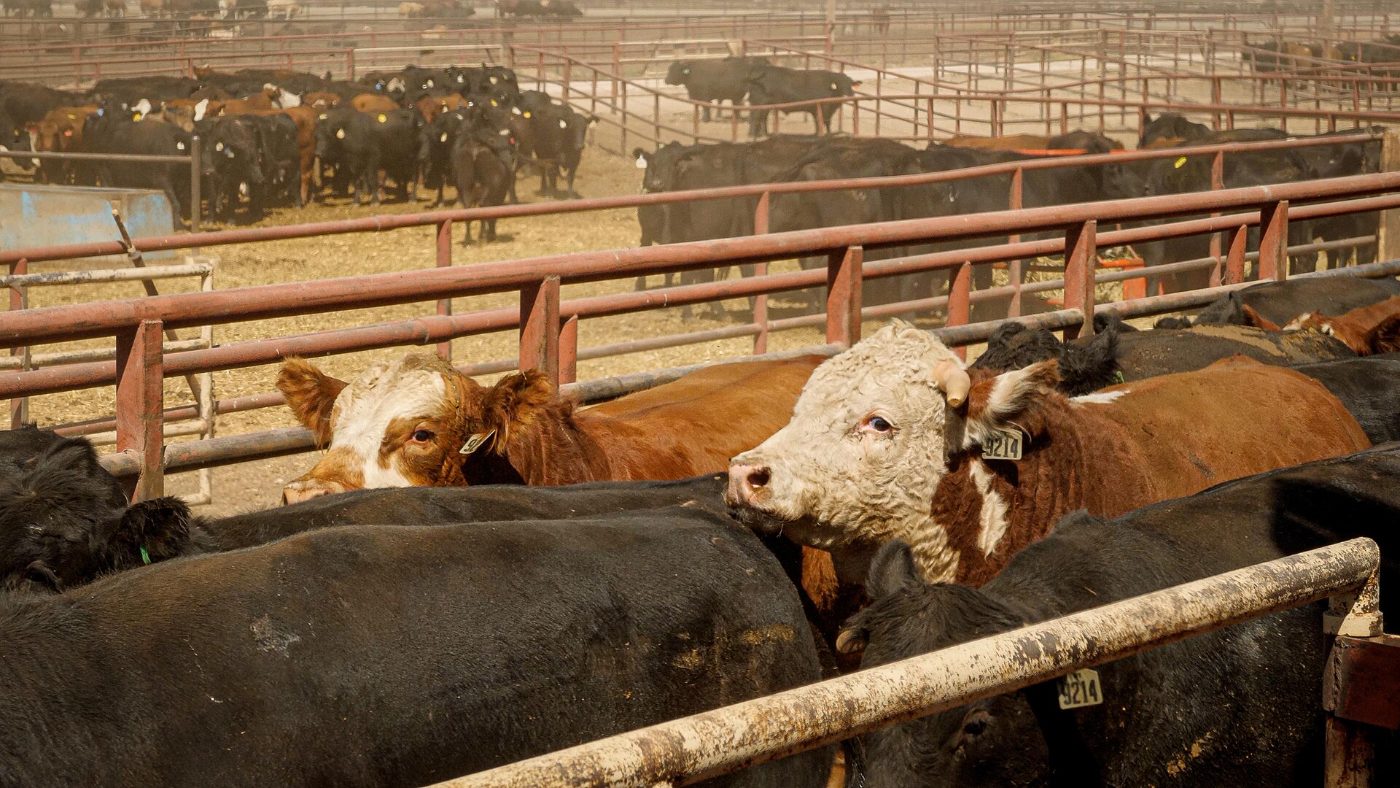
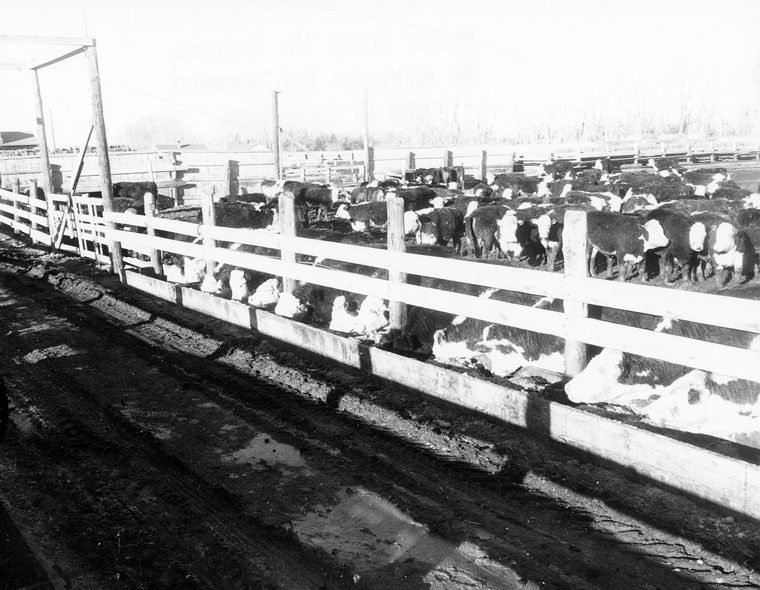
- How big? Even an operation with a few hundred head needs a provincial permit. Around Lethbridge the large feedlots are permitted to hold tens of thousands of cattle at one time. One recent provincial approval let a Lethbridge County feedlot grow from 25,000 to 37,500 head.
- “Head” just means the number of animals. A feedlot’s permit sets the most it can hold at once, but because cattle come and go, it feeds more than that over a year. A study for Lethbridge County found its feeder cattle turn over about two and a half times a year.
- A feedlot’s day: cattle usually stay 60 to 200 days. They arrive at about 200 to 270 kg (450 to 600 lb) as calves or 410 kg (900 lb) as yearlings and leave at about 635 to 680 kg (1,400 to 1,500 lb). Their feed is about 80% grain (mostly barley here) and 20% silage and hay. Staff and veterinarians check on them every day.
- Why here? Irrigated fields nearby grow the barley and corn silage the cattle eat, and the meat packing plants are close by.
- Back to the fields: manure is spread on cropland as fertilizer, following nutrient-management rules.
- Who watches over it: Alberta’s Natural Resources Conservation Board issues the permits for building or expanding feedlots, including manure storage, and enforces their conditions.
Dairy, hogs, poultry and bison
Cattle on feed get the headlines, but the barns and pastures along our country roads hold dairy cows, pigs, chickens and turkeys too, and one pasture just west of town holds bison.
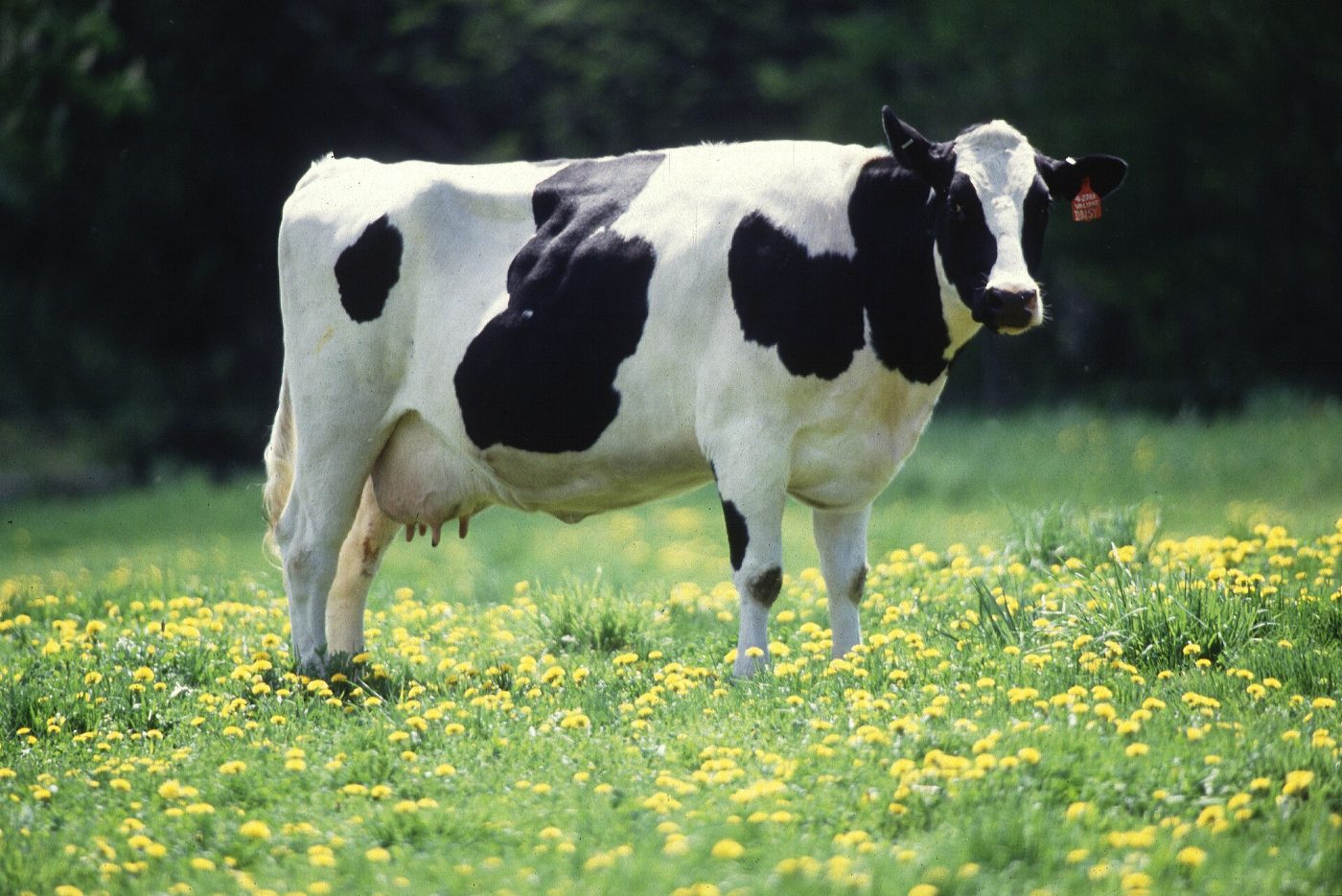 Photo: Keith Weller, USDA, public domain
Dairy
Look for: black-and-white Holsteins (about 95% of Alberta’s dairy cows), long open-sided barns, and a milk truck on the farm lane.
How many: about 460 dairy farms and 86,000 milking cows in Alberta (2025), and an estimated 9,000-plus cows in Lethbridge County. The average herd is about 125 to 150 cows.
Every day: cows are milked at least twice a day, by milking parlours or robotic milkers, and the milk truck calls every day or two.
Why here: dairy cows eat lots of alfalfa hay and corn silage, and our irrigated fields grow both.
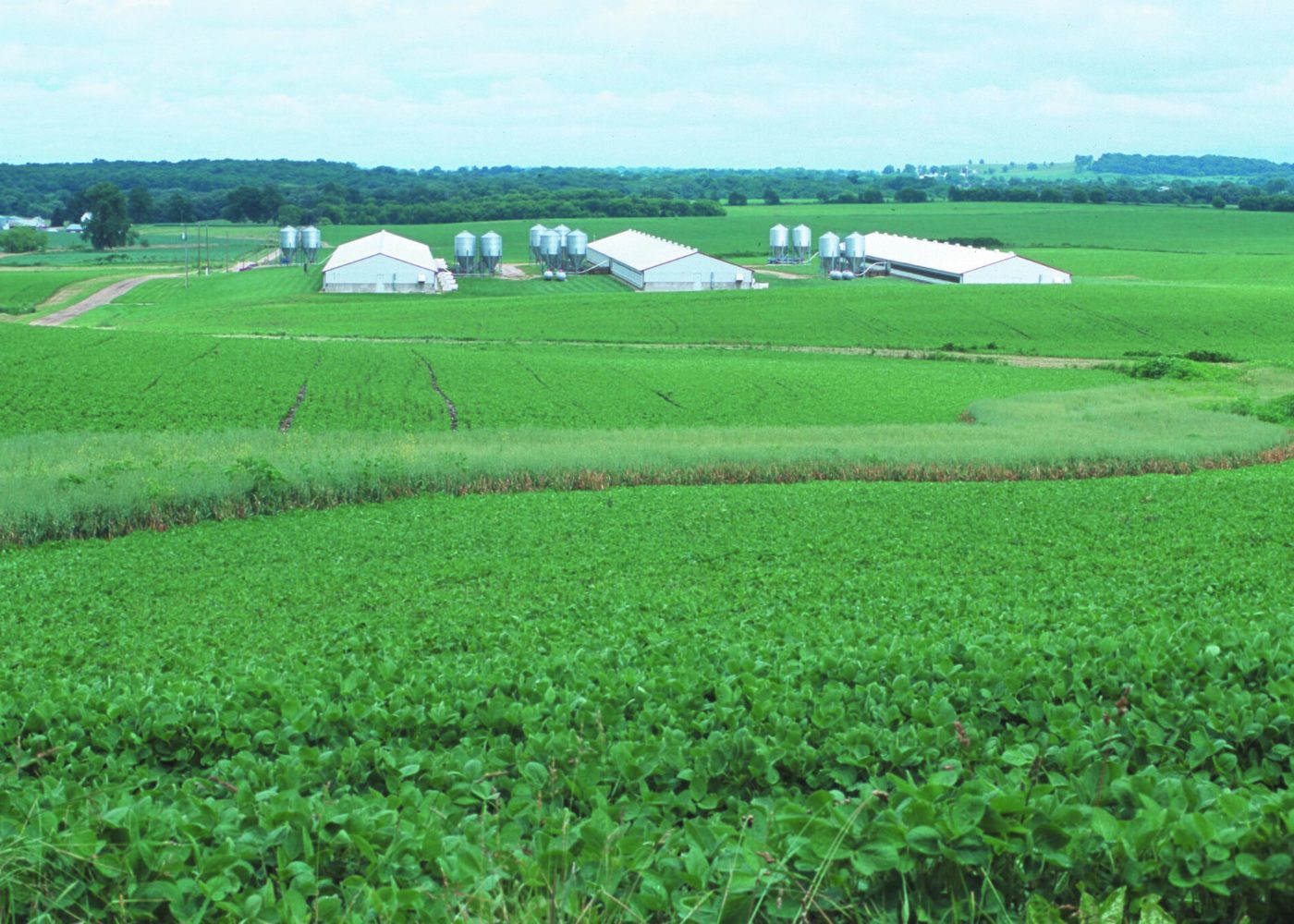 Photo: Bob Nichols, USDA NRCS, public domain
Hogs
Look for: long, low barns with big ventilation fans. Pigs are raised indoors, so you’ll see the barns rather than the animals.
How many: about 1.6 million pigs on 136 Alberta farms (2021), about one in nine of Canada’s pigs.
Fed on: mostly prairie-grown barley.
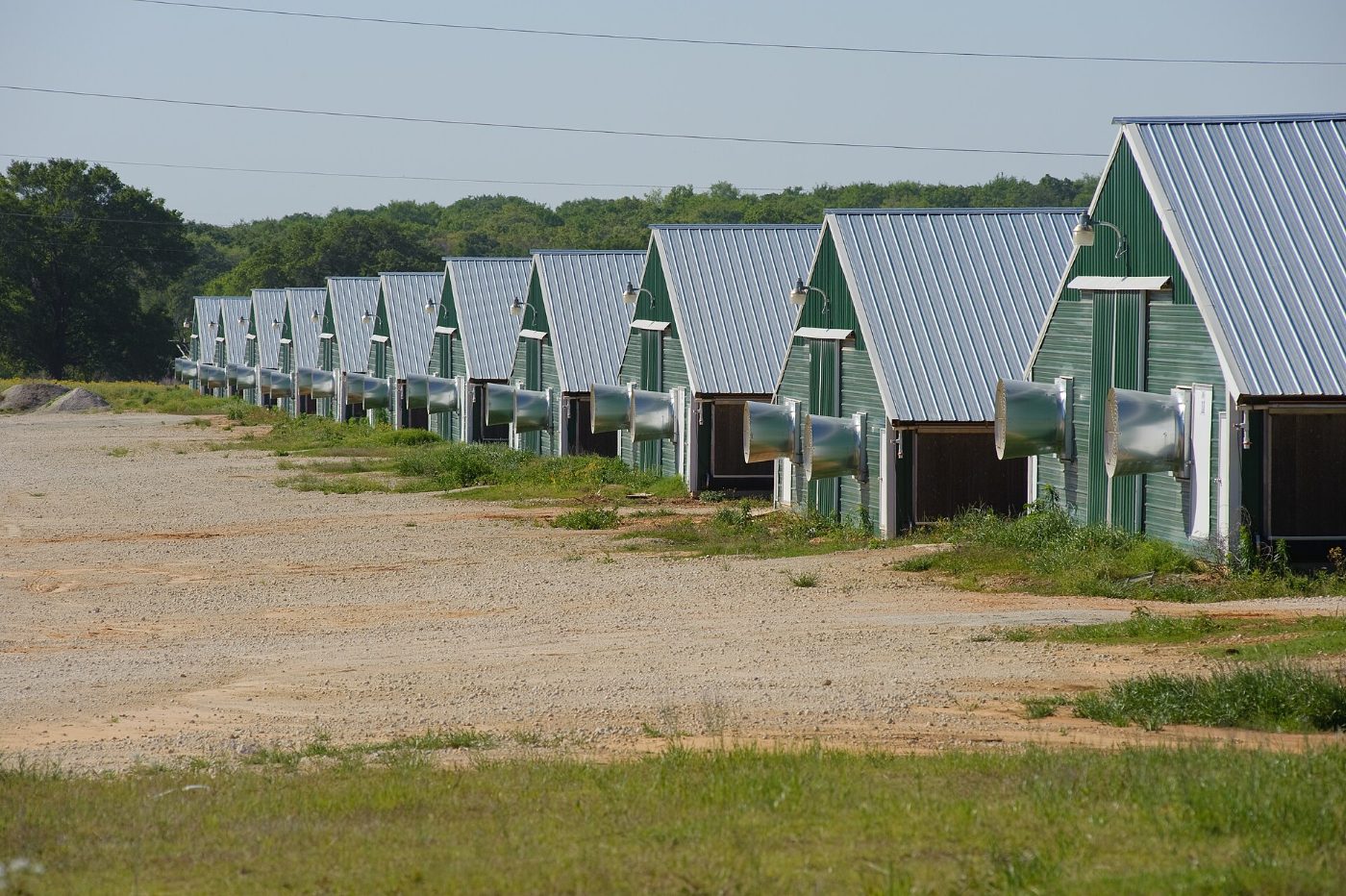 Photo: USDA NRCS, public domain
Poultry and eggs
Look for: closed barns with fans, much like hog barns. Some house laying hens for eggs; others raise chickens or turkeys for meat.
How many: about 14.9 million chickens and hens on 400 poultry and egg farms in Alberta (2021), plus turkey farms.
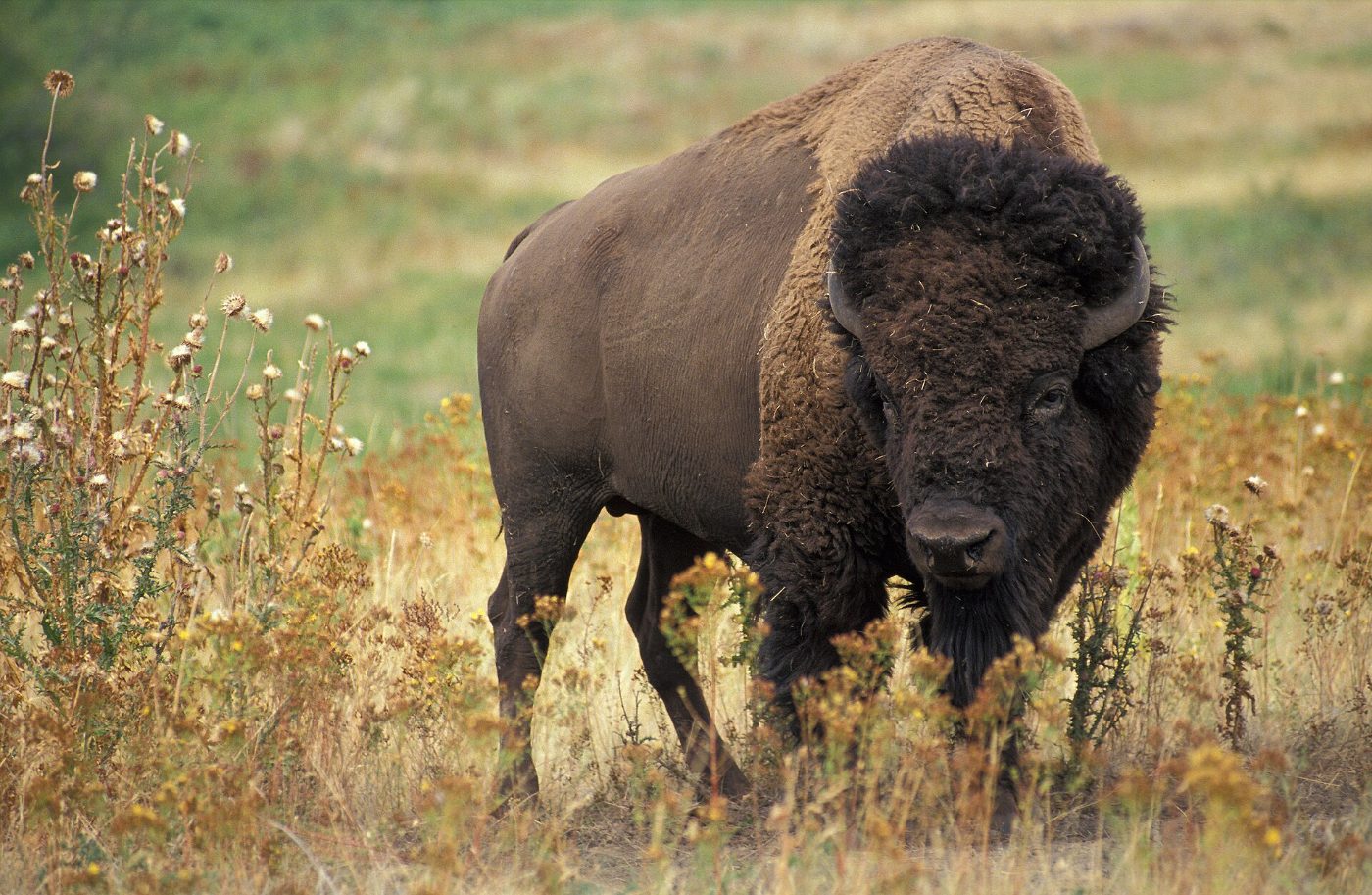 Photo: Jack Dykinga, USDA, public domain
Bison
Look for: the herd grazing just west of Lethbridge, behind extra-tall, extra-strong fences.
How many: about 65,000 bison on 472 Alberta farms and ranches (2021), more than four in ten of all the bison in Canada.
History: millions of bison once roamed these prairies and were central to Blackfoot life for thousands of years. Head-Smashed-In Buffalo Jump, a UNESCO World Heritage Site near Fort Macleod, tells that story.
Be safe: bison are big, fast and unpredictable. Watch from your vehicle or the roadside and never go past a fence.
Why farming matters here
Farming isn’t just out in the fields. It’s a big part of how Lethbridge earns its living: the trucks, the equipment dealers, the plants that turn potatoes into fries, beets into sugar and canola into oil, the meat and poultry processors, the vegetable packers and the cheese makers.
Sharing the road at harvest
From spring seeding through fall harvest, and especially August to November, you’ll meet big farm machinery on the roads: tractors pulling seeders, combines with wide headers, grain trucks, beet trucks and silage trucks. Some farms hire custom harvesting crews, who bring their own combines and trucks and move from farm to farm, so you may see a whole convoy of machines.
- Watch for the slow-moving vehicle sign: an orange triangle with a red border.
- Don’t pass unless it’s safe, and make sure the driver knows you’re there.
- Stay out of blind spots and keep far enough back for the driver to see you.
- The driver will pull over to let you pass when it’s safe. Be patient; they’re working.
- Be especially careful during planting and harvest seasons.
Planning a trip in harvest season? Check 511 Alberta for road conditions, and our Forecast for wind and weather.
For kids: crop-spotting game
Next time you’re on a country drive, see how many you can find:
- ☐ A bright yellow canola field
- ☐ Barley with “whiskers”
- ☐ Corn taller than a grown-up
- ☐ A centre pivot sprinkler
- ☐ An irrigation canal
- ☐ Round or square hay bales
- ☐ A combine at work
- ☐ A feedlot
- ☐ Black-and-white dairy cows
- ☐ A barn with big fans (hogs or chickens)
- ☐ The bison west of town
- ☐ An orange slow-moving vehicle sign
Want to see a farm up close? Farming Smarter, a farmer-focused research group in Lethbridge County, holds family-friendly Open Farm Days in summer, with tours of its research plots, a kids’ area and dig-your-own potatoes. Check their website for dates.
More for curious kids: Growing with Kids: Where Our Food Comes From · Kids’ Science Corner · Junior Explorer Passport
Sources
- Government of Alberta, Alberta Irrigation Information 2023 (crop areas, irrigated acres, districts, water sources, irrigation systems)
- Statistics Canada, Agricultural water use (Alberta’s share of irrigated land) and 2021 Census of Agriculture, Alberta
- Government of Alberta, Slow-moving vehicles and Manure management and confined feeding operations
- Alberta Agriculture: sugar beet, grain corn and irrigated alfalfa fact sheets; Alberta Crop Report
- Natural Resources Conservation Board, permit decision LA24026 (2024)
- Canola Council of Canada; Canadian Grain Commission (barley); The Canadian Encyclopedia (canola, wheat, dry beans, Taber, Lethbridge)
- Agriculture and Agri-Food Canada, Canadian Dairy Information Centre (dairy farms and cows, 2025); Alberta Milk (average herd size, breeds; 2022 infographic); Canadian Bison Association, bison producers by province (2021 Census)
- Photos: most are public-domain government photos from the U.S. Department of Agriculture; the canola photo is used under a Creative Commons licence; the 1958 Picture Butte photo is from the Galt Museum & Archives. All via Wikimedia Commons, with the licence linked under each photo.
- Alberta Cattle Feeders’ Association, Feedlot 101
- Economic Development Lethbridge; Alberta Irrigation Districts Association economic study (as reported by Alberta Farmer Express, 2022); Lethbridge County agriculture study (as reported by the Western Producer, 2020)
Last updated November 2026.