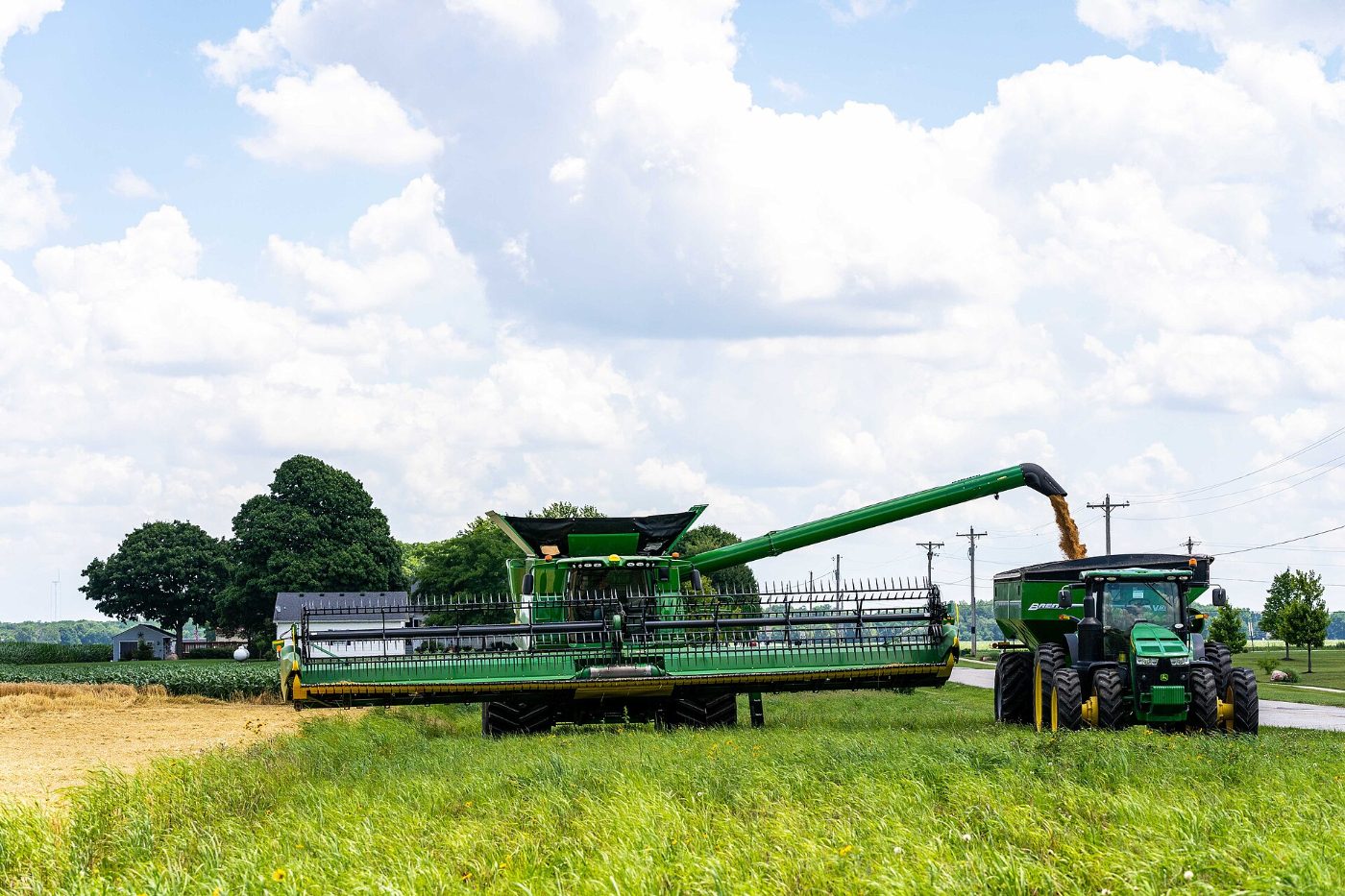
From late summer into November, the biggest machines in southern Alberta come out of the shed. Combines, grain carts, swathers, beet harvesters, potato diggers and the trucks that follow them are working the fields and moving between them on our roads.
What’s coming off the fields
In Alberta’s irrigation districts in 2023, the biggest crops by area were hard spring wheat (about 170,000 acres), canola (about 146,000), barley (about 117,000), corn for silage (about 100,000) and durum wheat (about 98,000). Dryland farms add hundreds of thousands more acres of wheat, durum, canola, barley and peas.
The order goes roughly like this:
- Late July and August: silage, early potatoes, peas and the first cereal crops.
- August and September: wheat, barley, durum and canola, the heart of grain harvest.
- September to November: corn, storage potatoes and sugar beets.
Most of the work is done by mid-October. In 2025, Alberta’s harvest was 99.4% complete by October 14.
Custom crews
Some farms hire custom harvesters, crews who bring their own combines, trucks and people and move from farm to farm. Some Canadian crews head south in early June and start in the winter wheat of Oklahoma or New Mexico. They follow the harvest north through Texas, Kansas, Nebraska and Montana, then come home in late August and work into October. Some American crews come north at the same time. When you see a convoy of combines and header trailers heading down the highway, that’s probably who it is.
Big machines
Today’s largest combines have engines of more than 680 horsepower and headers more than 12 metres (40 feet) wide. About 1,800 new combines are sold in Canada each year. On the road, that means wide, slow loads.
Sharing the road
- Watch for the slow-moving vehicle sign: an orange triangle with a red border. It’s required on farm machinery going under 40 km/h.
- Slow down early. Farm machinery may be travelling at 25 to 40 km/h.
- Don’t pass unless it’s safe, and never on a hill or curve or at an intersection. Wide machines may swing out to make a turn.
- Stay out of the blind spots, and give them room. The operator will pull over when it’s safe.
Weather rules the harvest
Every farmer in the south watches the forecast at harvest: dry, breezy days are combining days, while rain, dew and early frost can stop work or damage a crop. It’s one reason our Forecast and the Forecast Scorecard get so much attention in the fall.
Learn more
See the farm year and the road-safety section of our Farm Country guide. Sources: Government of Alberta (Alberta Irrigation Information 2023; Agri-News 2024; slow-moving vehicles); Alberta Farmer Express (2025); Grains West (2014).
Top photo: USDA, public domain.