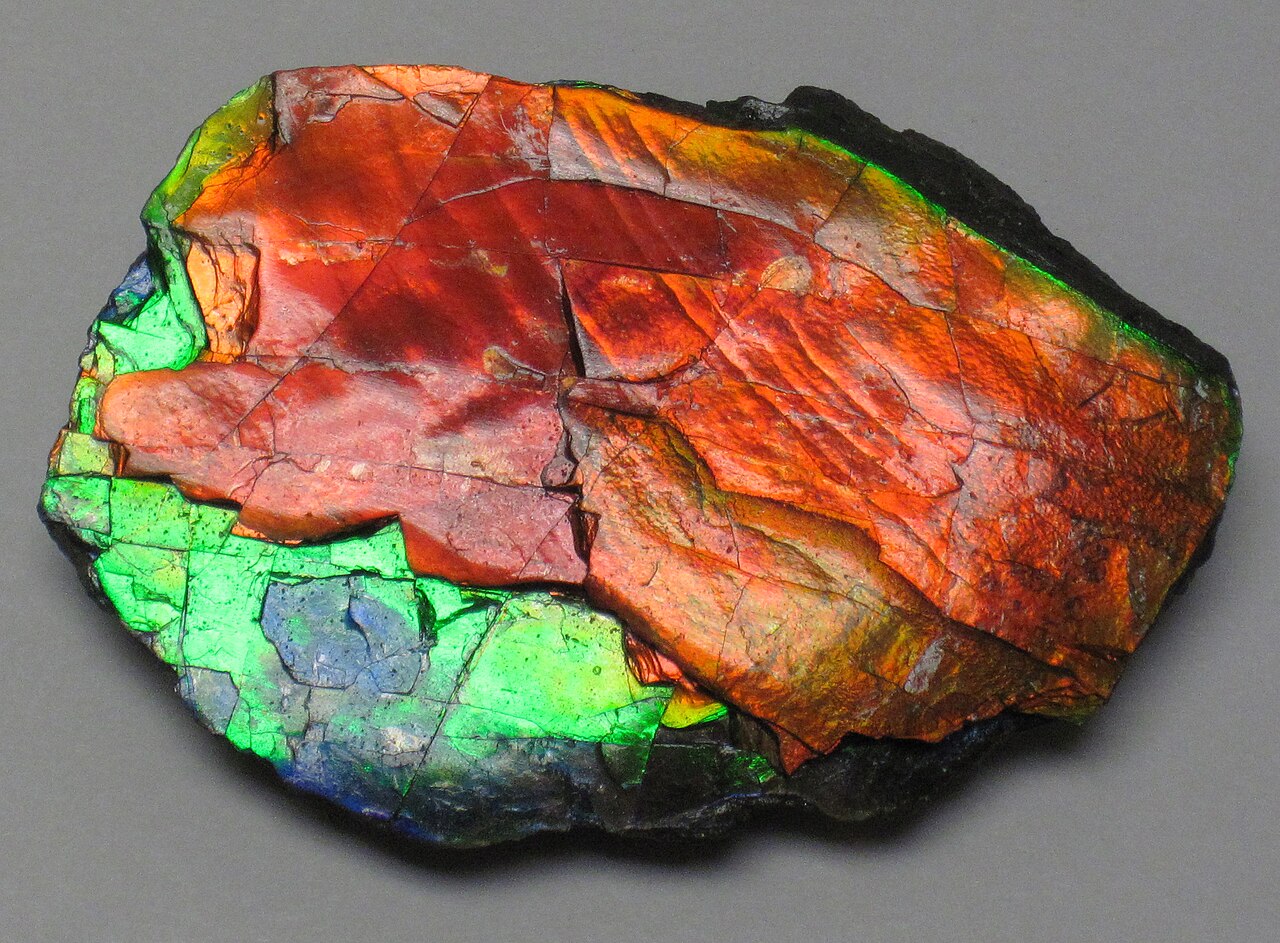
One of the rarest gemstones on Earth comes out of the riverbanks just south of Lethbridge. Ammolite flashes red, green, gold and sometimes blue like a rainbow trapped in stone, and in commercial quantity it’s found almost nowhere else in the world. It’s the official gemstone of Lethbridge and of Alberta. Here’s how a sea creature from the age of dinosaurs became our local treasure.
A sea where the prairie is now
Around 70 to 75 million years ago, southern Alberta was underwater. A warm, shallow inland sea, called the Bearpaw Sea or the Western Interior Seaway, split North America in two, from the Arctic Ocean all the way to the Gulf of Mexico.
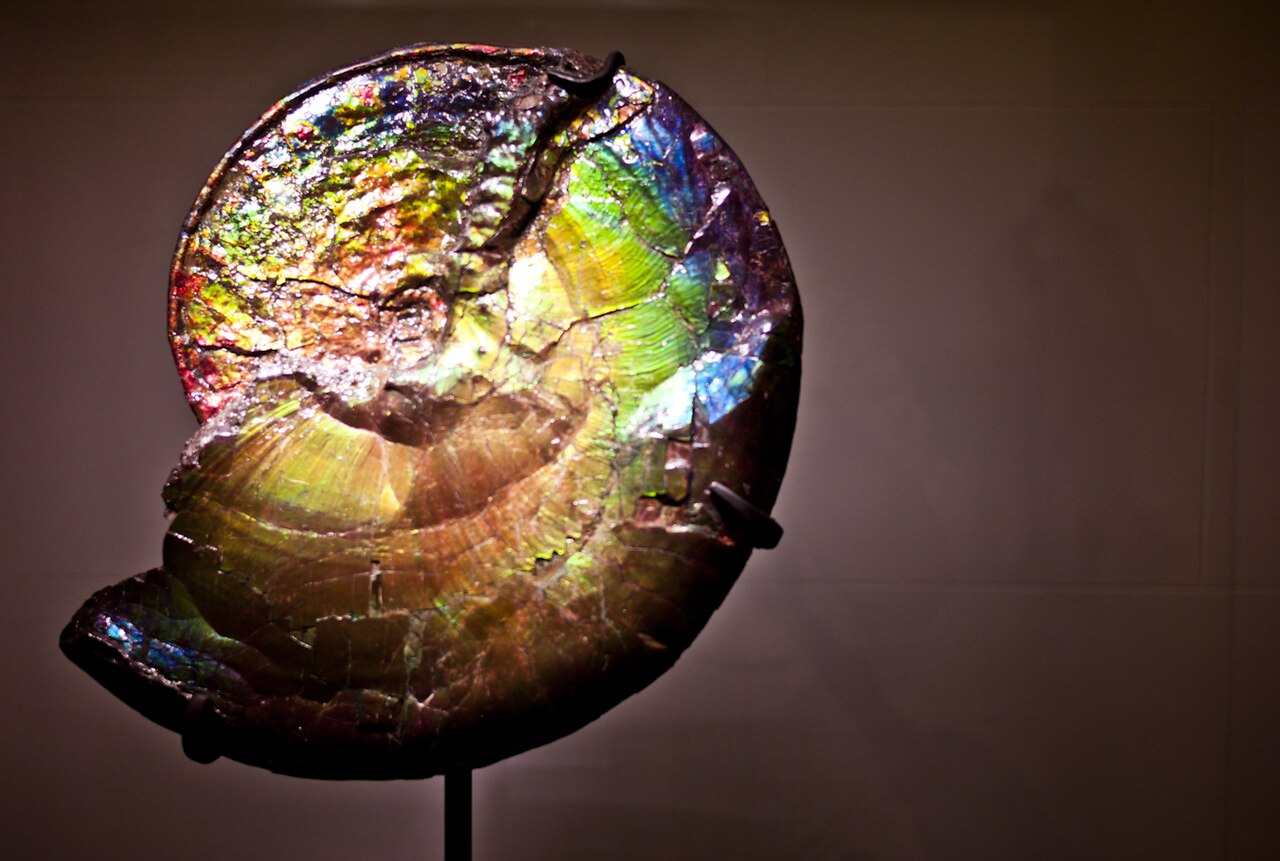
Swimming in that sea were ammonites, relatives of today’s squid and octopus that lived inside coiled shells. Two kinds, Placenticeras meeki and Placenticeras intercalare, had shells lined with a shimmering layer of nacre, the same mother-of-pearl that lines an oyster shell. When they died, their shells sank into the fine mud on the sea floor. That mud became the dark shale we now call the Bearpaw Formation, which shows up along the St. Mary, Oldman and Milk rivers.
Why it shines
Ammolite has no pigment in it at all. Its colour comes from structure. The nacre is built from microscopic layers of a mineral called aragonite, stacked like the pages of a book. When light passes through those layers, some colours are reinforced and others cancel out, the same way a soap bubble or an oil film on a puddle shows a rainbow. Tilt the stone and the colours shift.
- The thickness of the layers decides the colour. Red and green are the most common.
- Blue and violet need the thinnest layers of all, and they’re the rarest.
- In most of the world, ammonite shells slowly turned to a different mineral and lost their shine. In the Bearpaw shale, conditions were just right to preserve the original aragonite for 70 million years.
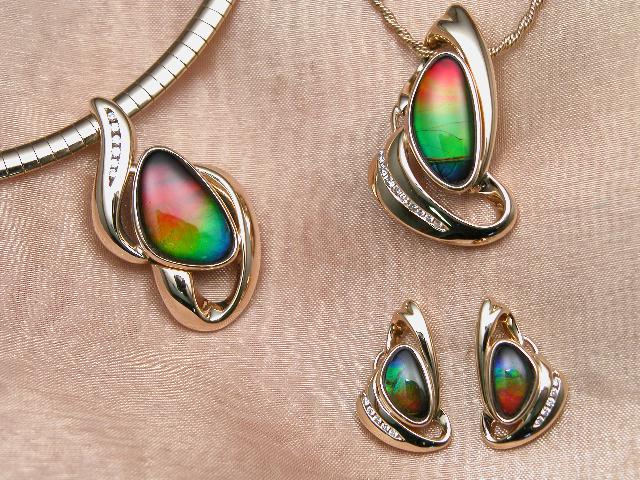
The colourful layer is usually only 0.5 to 0.8 mm (0.02 to 0.03 in) thick and quite fragile. That’s why most ammolite jewellery is a doublet or triplet: a thin slice of ammolite glued onto a backing of dark shale and, in a triplet, covered with a clear cap of quartz or spinel to protect it.
Iniskim: the buffalo stone
Long before ammolite was a gemstone, the Blackfoot people (Siksikaitsitapi) knew ammonite fossils as sacred. Certain fossil fragments of ammonites and baculites are called iniskim, the buffalo stone or buffalo calling stone. The Kainai name for ammolite, aapoak, means “small, crawling stone.”
The story is told of a hard winter, more than a thousand years ago, when the buffalo had wandered far away and the people were starving. A young woman was given a dream: a spirit told her the Creator had heard their prayers and would give them a gift, a stone called iniskim. She found the stone, the people performed the ceremony as they’d been taught, and the buffalo returned.
Iniskim are still sacred today. They’re carried for protection and good fortune and used in ceremony, and traditional buffalo stones are given only through a ceremonial process. The ammolite beds lie in Blackfoot territory, much of it on Kainai (Blood Tribe) land.
From riverbank to jewellery case
- 1960s: ammolite first appeared in jewellery. In 1967, Marcel Charbonneau and his partner Mike Berisoff made the first commercial doublets.
- 1981: the World Jewellery Confederation (CIBJO) officially recognized ammolite as a gemstone, the same year commercial mining began. It joined pearl and amber as one of very few gems made by living things.
- 2007: ammolite became the official gemstone of the City of Lethbridge.
- 2022: the Province of Alberta made it Alberta’s official gemstone.
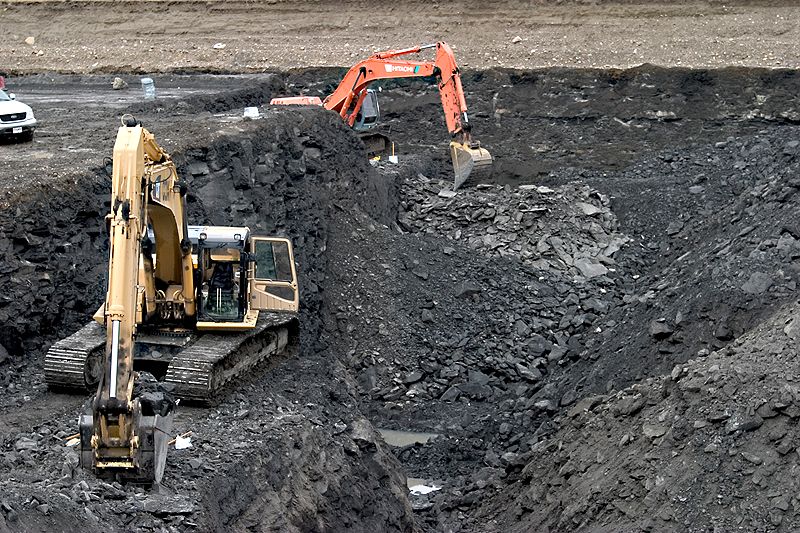
- 2024: Buffalo Rock Mining, owned by Tracy and Beth Day Chief of the Kainai Nation, bought KORITE, the largest ammolite producer, creating the world’s largest mine-to-market ammolite company. Most commercial mining happens along the St. Mary River south of Lethbridge.
A treasure in our own backyard
It’s remarkable to think that a gem prized around the world started as a sea creature swimming over the spot where Lethbridge sits today. If you’re out walking the coulees or the river bottoms, keep in mind that fossils in Alberta belong to the province, and the ammolite beds are on private and First Nation land. Enjoy the view, and leave the digging to those with permission.
Learn more
- University of Alberta: Ammolite is the Alberta gemstone, 75 million years in the making
- Gemological Institute of America: Ammolite, iridescent fossilized ammonite from southern Alberta
- KORITE: The Buffalo Stone
Questions or ideas about this post? Email us at help@drhd.com. We read every one.