Hail: ice from a summer sky
It can be 28 degrees and sunny one minute and pounding ice the next. Alberta is Canada’s hail capital, and knowing how hail works helps you protect your home, your car and your garden.
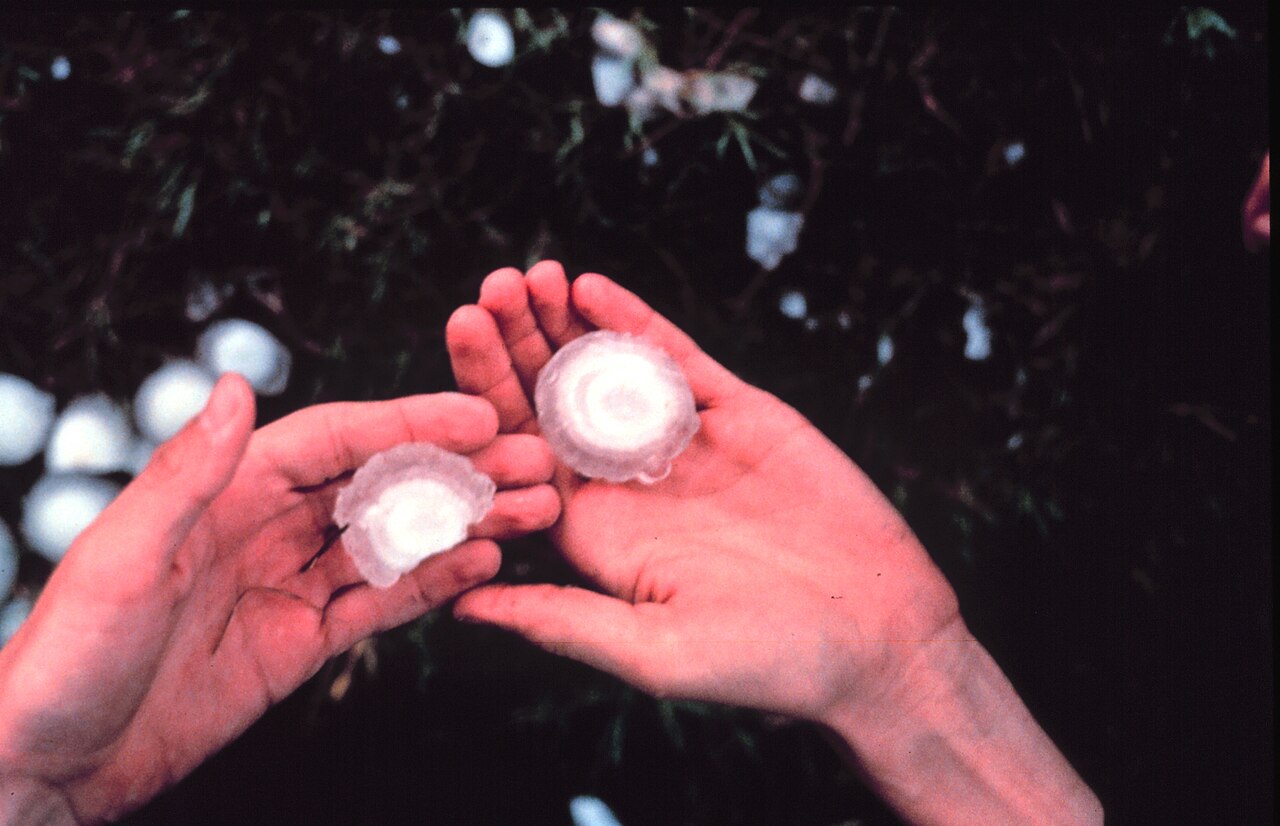
How a hailstone grows
Hail only comes from thunderstorms, and only from strong ones. Inside the storm, powerful rising air (an updraft) carries raindrops high above the freezing level, where they freeze into tiny pellets of ice.
- As a pellet is tossed around in the cloud, supercooled water (water that’s below freezing but still liquid) freezes onto it, layer by layer.
- The stronger the updraft, the longer the stone can stay up and the bigger it grows.
- When it gets too heavy for the updraft to hold, it falls.
Cut a big hailstone in half and you can often see rings, like the rings of a tree, showing the layers it picked up on its trip through the storm.
Why Alberta is “Hail Alley”
The area between Calgary and Red Deer gets more hailstorms than anywhere else in Canada. Three things come together here in summer:
- Moisture: farmland gives off moist air that feeds thunderstorms.
- A push upward: as that air moves west toward the Rockies, the rising ground lifts it, which can set off storms.
- A low freezing level: east of the mountains the freezing level is low enough that hailstones can reach the ground before they melt.
Hail Alley gets the headlines, but southern and central Alberta are hit by hail nearly every year, including the farmland, towns and acreages around Lethbridge. Storms that build over the foothills in the afternoon often roll east across the prairie toward us by evening.
Records and big storms
- The billion-dollar storm: on June 13, 2020, hail hammered Calgary, Airdrie and Rocky View County. Insured damage came to roughly $1.2 billion, making it the costliest hailstorm in Canadian history.
- A pattern: three of Canada’s ten costliest weather disasters have been hailstorms in the Calgary area.
How big is that hail?
Forecasters and storm reporters compare hail to everyday objects. Here’s a rough guide by diameter:
- Pea: about 0.6 cm
- Marble: about 1.5 cm
- Quarter: about 2.4 cm. Around this size, hail starts damaging cars, roofs and crops.
- Golf ball: about 4.4 cm
- Tennis ball: about 6.5 cm
- Baseball: about 7 cm
Environment Canada issues a severe thunderstorm warning when a storm is producing, or is expected to produce, large hail, along with other dangers such as damaging winds or heavy rain.
Staying safe in a hailstorm
- At home: stay inside and away from windows and skylights. Close drapes or blinds to catch broken glass.
- Before the storm: park in a garage or under cover if you can, bring pets and livestock in where possible, and move patio cushions and potted plants under shelter.
- Driving: slow down, and pull over somewhere safe if you can’t see. Don’t stop under an overpass and block traffic. Stay in the vehicle, away from the windows, and cover your head.
- Caught outside: get into the nearest building. If there’s none, crouch down and protect your head with your arms, a jacket or a bag.
- After: watch for slippery ice on roads and walks, and photograph damage for insurance before you clean up.
Garden tips for hail season are in our Garden section.
Key terms
- Updraft
- Rising air inside a thunderstorm. Stronger updrafts can hold up, and grow, bigger hail.
- Freezing level
- The height in the atmosphere where the temperature drops below 0°C (32°F).
- Supercooled water
- Water that stays liquid below freezing until it touches something, like a growing hailstone.
- Severe thunderstorm warning
- Environment Canada’s alert that a storm is producing, or will soon produce, dangerous weather such as large hail.
Learn more
- Weather School: Southern Alberta Storms
- Northern Hail Project, Western University
- Lethbridge forecast and alerts, Environment and Climate Change Canada
Sources: The Weather Network (why Hail Alley gets so much hail; record hailstone); Insurance Canada, reporting Insurance Bureau of Canada and CatIQ figures (2020 Calgary hailstorm). Size comparisons are standard storm-spotter references.
More Weather Wonders
← All Weather Wonders · Chinooks · Hail · Tornadoes · Thunderstorms · Dust devils · Blizzards · Frost and fog · Sky wonders · Around the world