Sky wonders: sun dogs, halos, northern lights and strange clouds
The big prairie sky puts on some amazing shows. Here’s what you’re looking at, and when to look up.
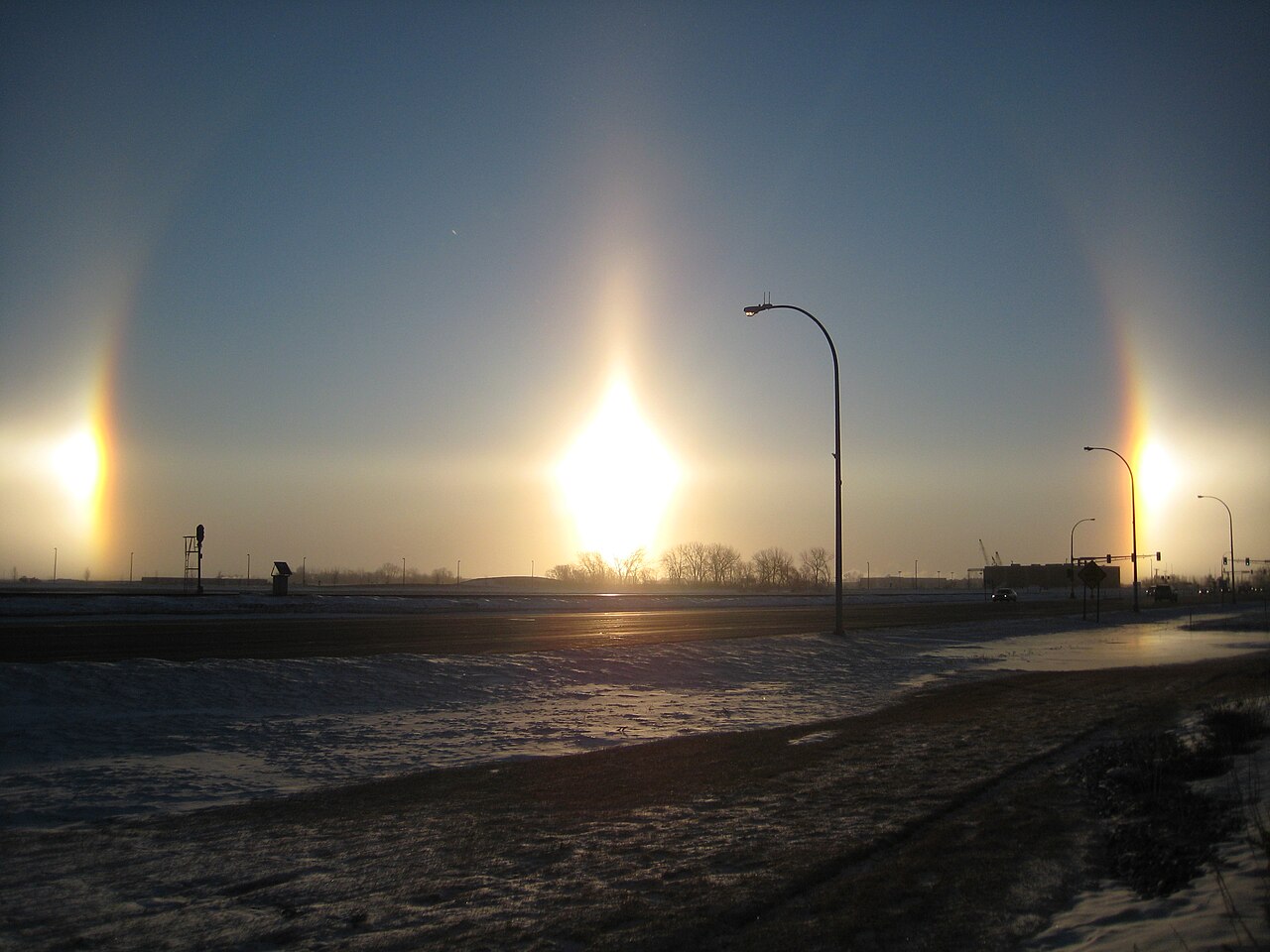
Sun dogs and halos
On a cold, clear day, you may see two bright spots of light on either side of the sun, sometimes with a touch of rainbow colour. Those are sun dogs. Sometimes there’s a full ring around the sun too: a halo.
- Both are made by sunlight bending as it passes through tiny six-sided ice crystals, either high in thin cirrus cloud or floating near the ground on very cold days.
- The halo and the sun dogs sit about 22 degrees from the sun. Hold your hand out at arm’s length with your fingers spread: from thumb tip to little finger is roughly 20 degrees.
- They’re easiest to see when the sun is low, in the morning and late afternoon.
- The moon can make halos too, on a cold night with high, thin cloud.
Northern lights
The aurora borealis happens when particles streaming from the sun hit Earth’s magnetic field and make gases high in the atmosphere glow green, red and purple. Long, clear winter nights are the best time to look, but the aurora can show up in any season when the sun is active.
We have a full guide, including when and where to look around Lethbridge: Northern lights from southern Alberta. For alerts, see Space Weather Canada.
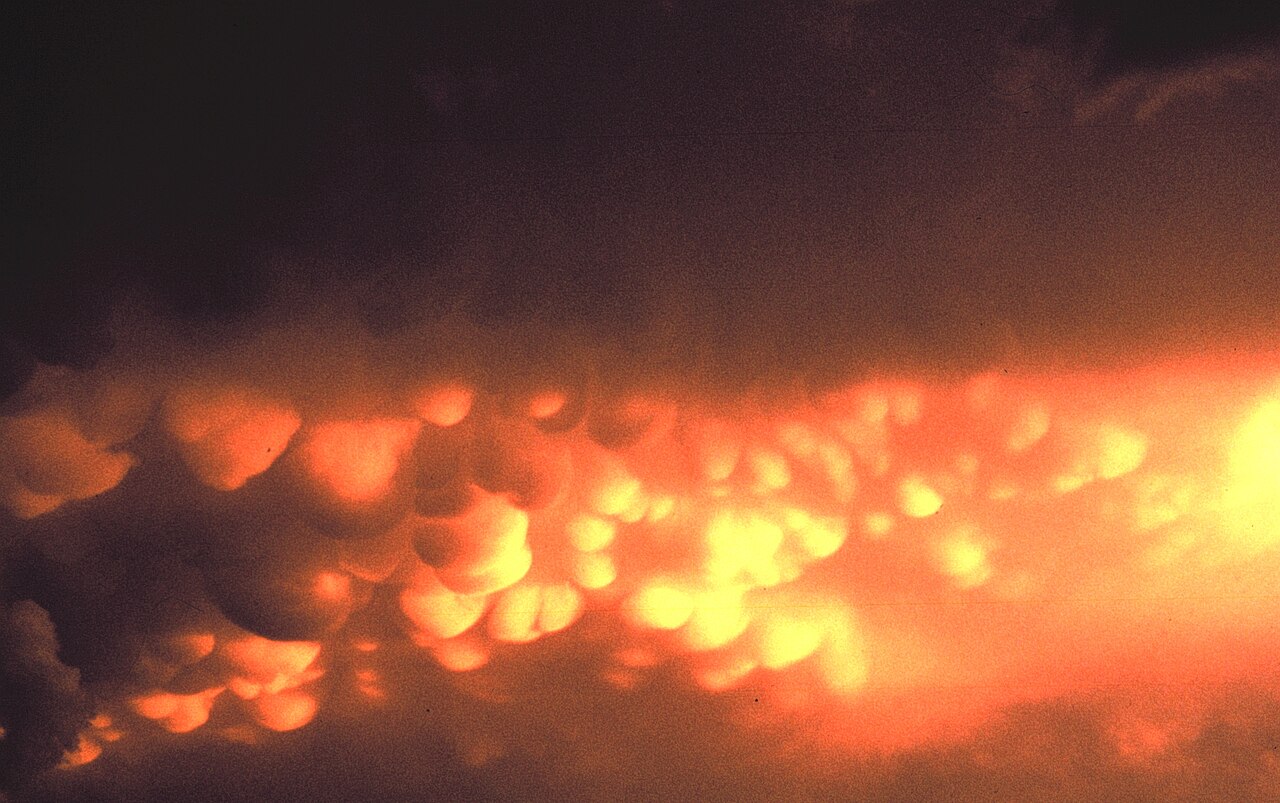
Strange clouds
- Lenticular clouds: smooth, lens- or saucer-shaped clouds that seem to hang still in a strong wind. They form in the waves of air flowing over the Rockies, and are a regular sight over southern Alberta, especially before and during a chinook.
- Mammatus clouds: rounded pouches hanging under the anvil of a thunderstorm, made by cold, wet air sinking out of the cloud. They often show up as a storm passes, and look dramatic at sunset.
- Virga: grey streaks of rain or snow hanging from a cloud that never reach the ground, because they evaporate in the dry air below. Very common in our dry prairie climate.
Learn to name every cloud in Weather School: Clouds.
Rainbows
A rainbow appears when sunlight shines into falling raindrops and is bent and reflected back toward you, splitting into colours along the way.
- You’ll only see one with the sun behind you and rain in front of you, so look east in the late afternoon after a storm passes.
- The bow is centred on the point directly opposite the sun, about 42 degrees from it, which is why rainbows are higher when the sun is lower.
- A fainter second bow sometimes appears outside the first, with its colours in reverse order.
Learn more
- Sky & Space: our night-sky guide, calendar and eclipses
- Space Weather Canada, Natural Resources Canada
- Winter weather wonders on the Prairies, CBC Saskatchewan
Sources: CBC News (sun dogs and halos on the Prairies); the angles for halos and rainbows are standard atmospheric optics.
More Weather Wonders
← All Weather Wonders · Chinooks · Hail · Tornadoes · Thunderstorms · Dust devils · Blizzards · Frost and fog · Sky wonders · Around the world