Chinooks: the wind that eats the snow
In the middle of a bitter January, a warm west wind can roar down off the Rockies and send the temperature soaring in minutes. Southern Alberta is one of the best places in the world to see it happen.
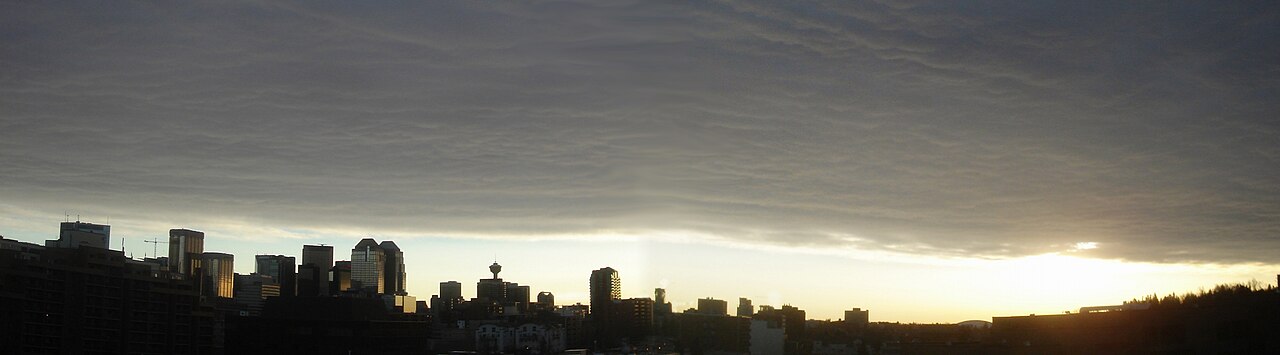
What is a chinook?
A chinook is a warm, dry, gusty west wind that comes down the eastern slopes of the Rocky Mountains onto the prairies. In Canada, the “chinook belt” is almost entirely in southern and central Alberta. Lethbridge is right in the middle of it.
Chinooks happen in every season, but you notice them most in winter, when they break a cold spell. In southwestern Alberta, roughly one winter day in three is a chinook day.
They’re often nicknamed the “snow eater,” and for good reason: a strong chinook can make a snowbank shrink before your eyes. The wind is so dry that much of the snow turns straight into water vapour without ever becoming slush.
How it works, in one minute
- Pacific air climbs the mountains. Moist air from the west is pushed up the BC side of the Rockies. As it rises it cools, its moisture turns to cloud, and it drops rain and snow on the western slopes.
- Turning water vapour into cloud releases heat. That warms the air a little on the way up.
- Dry air sinks down our side. Coming down the eastern slopes, the air is squeezed by rising pressure and warms quickly. Dry air warms faster as it sinks than moist air cools as it rises, so it arrives on the prairie warmer and much drier than it started.
- Out goes the Arctic air. The warm wind scours away the cold air that was sitting over us.
For the full science, including mountain waves and rotors, see Weather School Lesson 11: Chinooks and Mountain Weather.
Chinooks by the numbers
- How fast: when a chinook arrives, the change can be sudden. A rise of 27 degrees in two minutes has been observed.
- How much warmer: on a chinook day the high can be 13 to 25 degrees above normal, with the biggest jumps in the southeast of the province.
- How windy: steady winds of about 16 to 60 km/h are typical, with gusts up to 100 km/h, and sometimes more.
- How dry: the humidity can fall to 25 percent or lower.
- How often: southern and central Alberta average about 30 to 35 chinooks a year.
Reading the sky: the chinook arch
Look west before a chinook and you may see the arch: a long sheet of cloud with a sharp, straight edge, and a band of clear blue sky between it and the mountains. The clear band is where the air is sinking and drying out. Sunrises and sunsets under the arch can light it up in brilliant orange and pink.
Lethbridge looks straight west to the mountains across open prairie, which makes the arch easy to spot from almost anywhere in the city. When you see it, expect the wind to pick up and the temperature to climb.
Living with chinooks
- Ice after the thaw. Meltwater that refreezes overnight can leave sidewalks and roads slicker than before. More in A chinook warm-up can still leave ice behind.
- Dry skin, dry plants, dry soil. The dry wind pulls moisture out of everything. See Chinooks dry things out fast for watering evergreens and protecting your skin.
- Chinook headaches. Many people report headaches when a chinook blows in. See Chinook headaches: why they happen.
- Strong gusts. Secure garbage bins, patio furniture and loose sheets of plywood, and take care with trailers and high-sided vehicles on open highways. Watch for wind warnings from Environment Canada.
Watch it happen
Our own station on the west side of Lethbridge records every reading as it happens. On a chinook day, watch the temperature climb and the humidity drop on the West Lethbridge Weather live page.
Key terms
- Chinook
- A warm, dry, gusty wind coming down the eastern side of the Rockies.
- Chinook arch
- A band of clear sky under a straight-edged sheet of cloud to the west, a sign of a chinook.
- Lee side
- The downwind side of a mountain range. For the Rockies, that’s our side.
- Foehn
- The general name for warm, dry winds that come down the lee side of mountains.
Learn more
- Chinook, The Canadian Encyclopedia
- Weather School Lesson 11: Chinooks and Mountain Weather
- Lethbridge forecast and alerts, Environment and Climate Change Canada
Sources: The Canadian Encyclopedia (formation, frequency, temperature rise, wind and humidity figures); Global News (Pincher Creek record, chinooks per year).
More Weather Wonders
← All Weather Wonders · Chinooks · Hail · Tornadoes · Thunderstorms · Dust devils · Blizzards · Frost and fog · Sky wonders · Around the world