Thunderstorms and lightning
On a hot summer afternoon, towering clouds can build over the foothills and roll across the prairie by suppertime. They bring the most spectacular weather we get, and lightning is the part most likely to hurt someone.
How a thunderstorm grows
Every thunderstorm needs three things: moisture, unstable air (warm air near the ground with colder air above, so a rising bubble keeps rising), and something to start the air rising, such as the sun heating the ground, a cold front, or air pushed up the slopes of the foothills.
- Growing stage: a puffy cumulus cloud billows upward as warm, moist air rises.
- Mature stage: the cloud towers into a cumulonimbus, often with a flat “anvil” top spreading out high up. Rain, hail, lightning and gusty winds all happen now.
- Dying stage: cool air sinking out of the storm cuts off the warm air feeding it, and the storm rains itself out.
Most storms live less than an hour. The strongest ones, called supercells, can last for hours and bring large hail and tornadoes. See our pages on hail and tornadoes.
Lightning: a giant spark
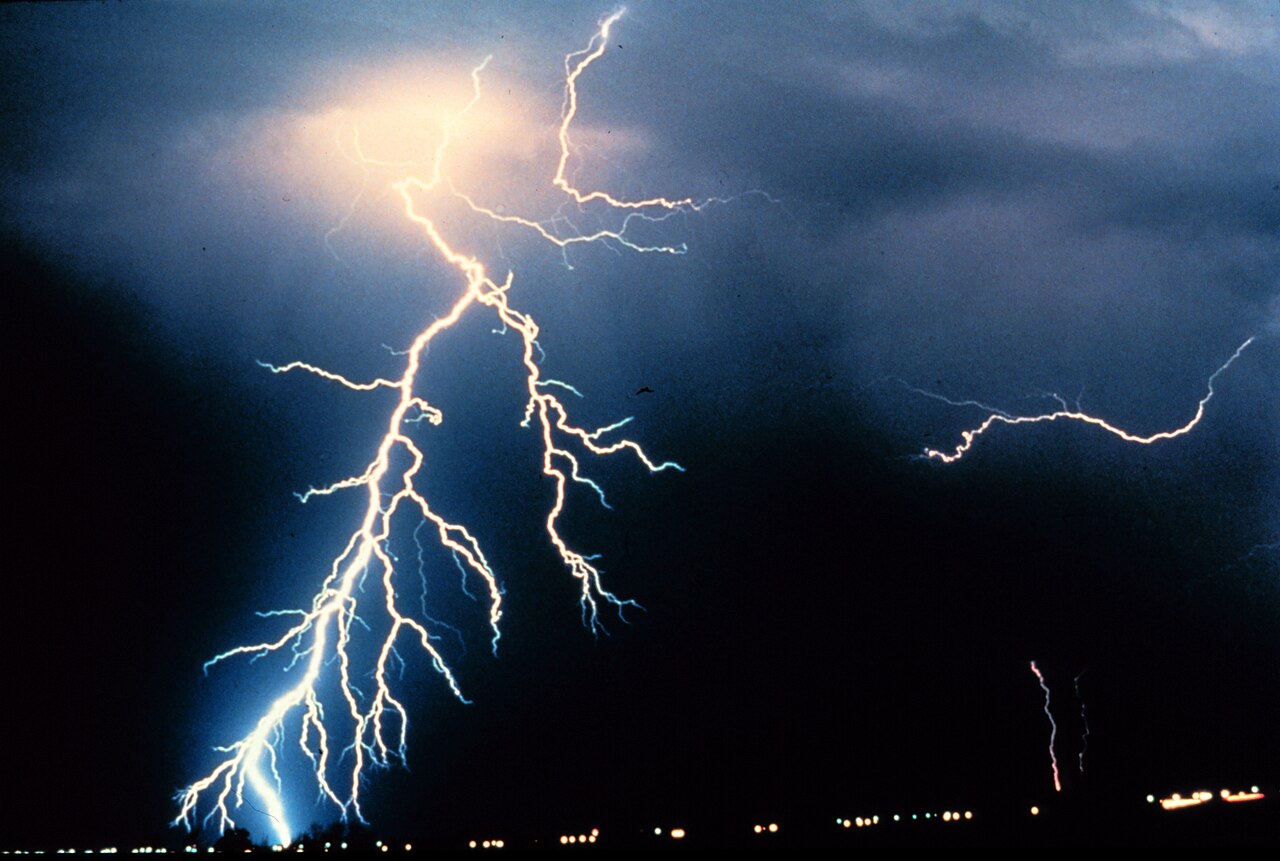
Inside a storm, ice crystals and small hail bump into each other in the rising and sinking air. The collisions separate electric charge: the top of the cloud becomes positive and the lower part negative. When the difference gets big enough, the air breaks down and a lightning bolt jumps between the charges, within the cloud, between clouds, or down to the ground.
Thunder: the sound of lightning
A lightning bolt heats the air around it in a split second, so fast that the air explodes outward. That’s thunder. Light reaches you almost instantly, but sound takes about 3 seconds to travel 1 km. Count the seconds between the flash and the bang and divide by 3 to get the distance in kilometres.
Storms that start over the foothills in the afternoon often drift east across the prairie toward Lethbridge in the evening. Many rumble in with gusty winds and little rain, because our dry air soaks up the rain before it reaches the ground. The lightning is just as dangerous, and dry lightning can start grass fires.
When thunder roars, go indoors
- Safe shelter: a fully enclosed building with wiring and plumbing. If there isn’t one nearby, a hard-topped metal vehicle with the windows closed.
- Not safe: sheds, picnic shelters, tents, covered porches and open boats.
- Caught outside: stay away from tall things like trees, poles, wires and fences. Move to a low spot, watching for flooding. Get off the water and away from the shore.
- Indoors: stay off corded phones and anything plugged in, and stay out of the shower and bath. Battery-powered devices are fine.
- Outdoor events and sports: stop play at the first thunder and wait at least 30 minutes after the last thunder before starting again.
Key terms
- Cumulonimbus
- The tall, towering thunderstorm cloud, often with a flat anvil top.
- Unstable air
- Air where a rising bubble keeps rising, the fuel for thunderstorms.
- Dry lightning
- Lightning from a storm whose rain evaporates before reaching the ground.
- Supercell
- A long-lived thunderstorm with a rotating updraft.
Learn more
- Lightning safety and preparedness fact sheet, Environment and Climate Change Canada
- Weather School: Southern Alberta Storms
- Lethbridge forecast and alerts, Environment and Climate Change Canada
Sources: Environment and Climate Change Canada (lightning numbers and safety). The thunder-distance rule uses the speed of sound in air.
More Weather Wonders
← All Weather Wonders · Chinooks · Hail · Tornadoes · Thunderstorms · Dust devils · Blizzards · Frost and fog · Sky wonders · Around the world