Freezing fog, rime and hoar frost
Some winter mornings, every branch, fence wire and blade of grass is coated in sparkling white. It’s one of the prettiest things winter does, and two very different processes can cause it.
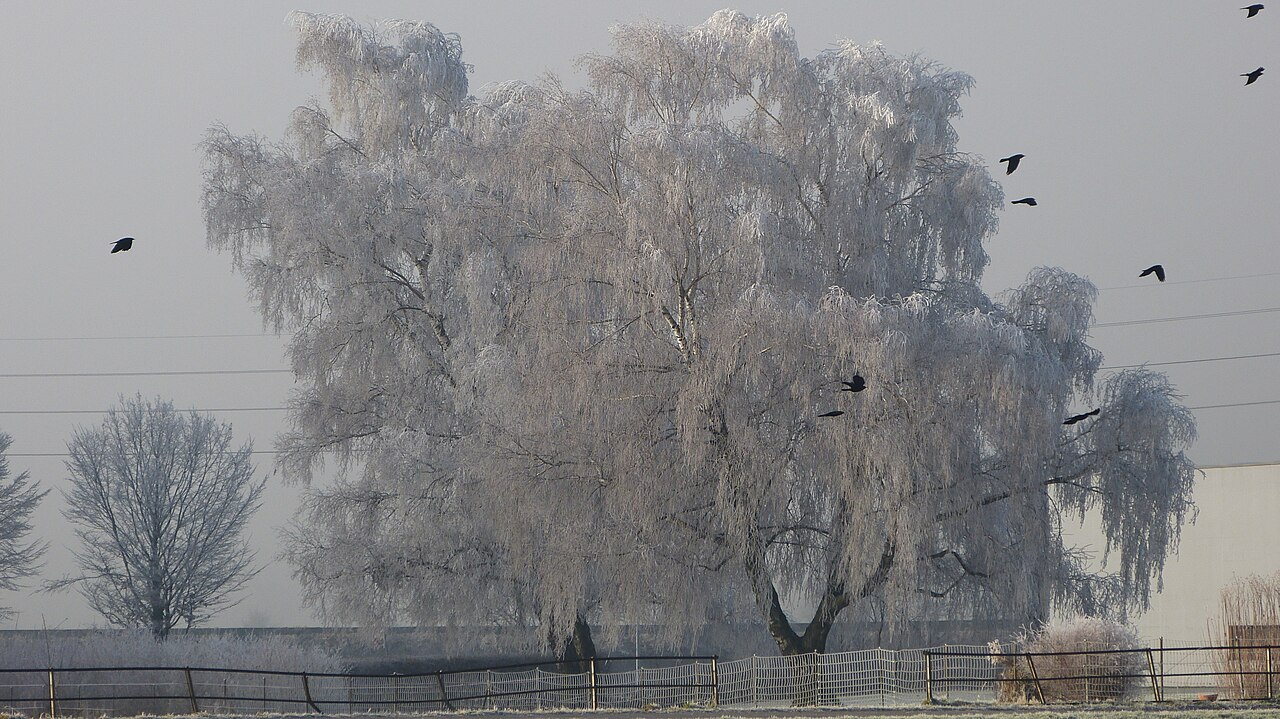
Hoar frost: frost that grows from the air
On a clear, cold, calm night, water vapour in the air can turn straight into ice crystals on twigs and fences without ever becoming liquid water first. As Environment and Climate Change Canada meteorologist Terri Lang puts it, it “goes from a gas to a solid.”
- It grows as delicate, feathery needles and plates.
- It’s very light and falls off at a touch or a puff of wind.
- It’s harmless: too light to build up and do damage.
Freezing fog and rime ice
Fog droplets can stay liquid well below 0°C (32°F). This is called freezing fog. When those supercooled droplets drift into a tree, a power line or a car, they freeze on contact. That ice is rime.
- Rime looks more like frozen droplets, built up on the side facing the wind.
- It’s heavy and hard to knock off.
- After days of fog it can build up thick enough to bring down branches and power lines and cause outages. The worst rime tends to form around -4°C (25°F) to -7°C (19°F).
Where to look around here
Cold air drains downhill at night and pools in low spots, so the Oldman River valley and coulees often get fog and frost when the uplands don’t. Some of the best frost photos come on a clear, calm morning after a foggy night, just as the sun comes up. Get out early: a little sunshine or wind and it’s gone.
Freezing fog and rime are common on the Prairies when cold air settles in for days under a high-pressure system. A chinook usually ends it fast.
Key terms
- Hoar frost
- Feathery ice crystals that grow straight from water vapour on clear, cold, calm nights.
- Freezing fog
- Fog made of supercooled water droplets, below 0°C (32°F) but still liquid.
- Rime
- Ice formed when freezing fog droplets freeze on contact with objects.
Learn more
- Weather School: Humidity, Dew Point and Fog
- The difference between hoarfrost and rime ice, CBC Calgary
- Power outages: what to do
Source: CBC News, quoting Environment and Climate Change Canada meteorologist Terri Lang.
More Weather Wonders
← All Weather Wonders · Chinooks · Hail · Tornadoes · Thunderstorms · Dust devils · Blizzards · Frost and fog · Sky wonders · Around the world