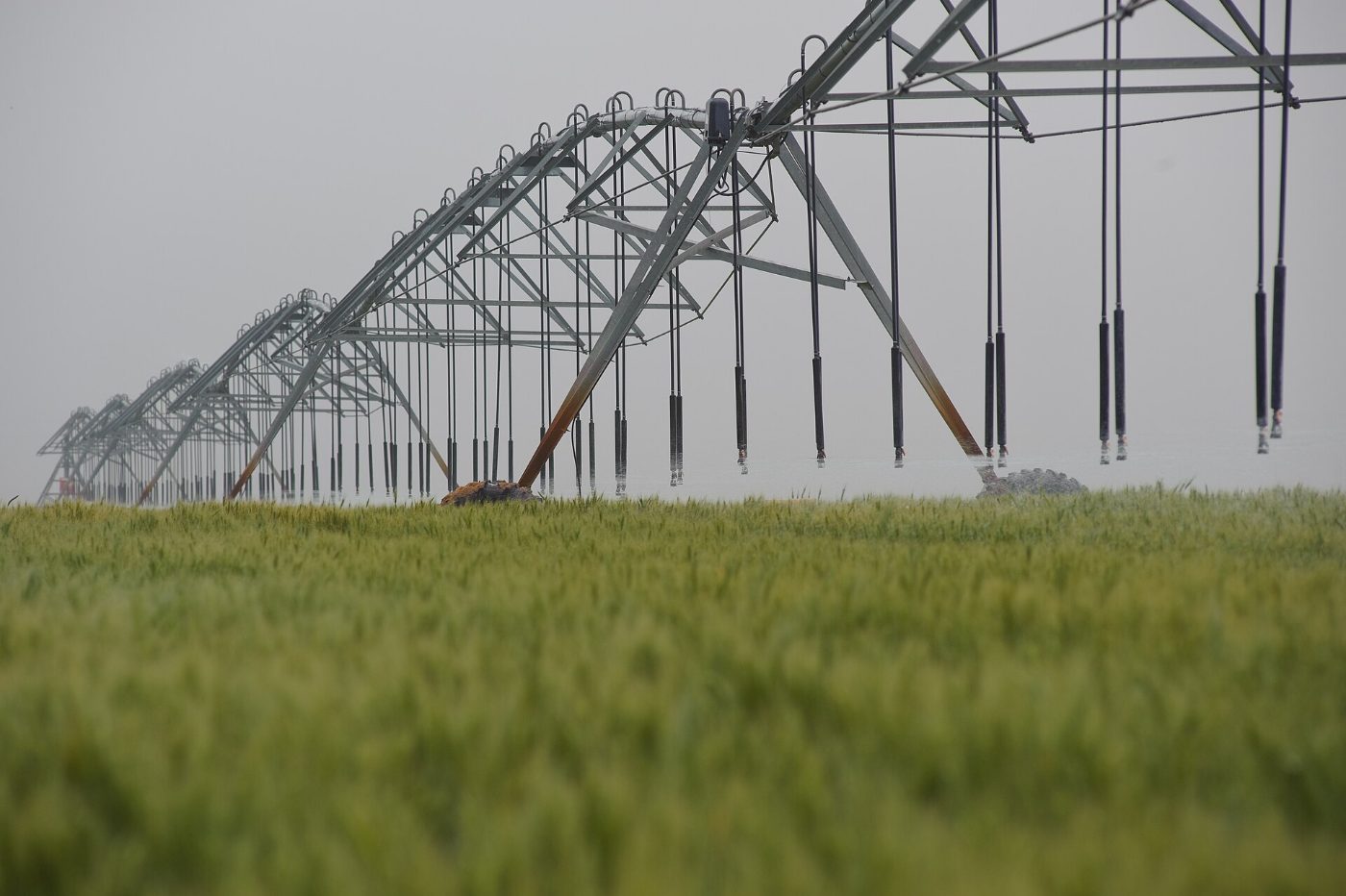
Lethbridge is semi-arid. We get less than 400 mm of rain and snow in an average year, and the summer wind dries the soil out fast. Yet drive out of town in July and you’ll see green circles of potatoes, sugar beets, corn and alfalfa. The reason is irrigation, and southern Alberta has been at it for more than 125 years.
It started here
Canada’s first major irrigation project was dug right in our backyard. Between 1898 and 1900, crews built a canal from the St. Mary River near Kimball to Lethbridge and Stirling, about 90 miles long. The head-gates at Magrath opened in November 1899. The project was led by Elliott Galt, Charles Magrath and Charles Ora Card, whose settlers from Utah knew from experience what water could do for dry land. Parks Canada now recognizes the Galt canal as a national historic site.
More projects followed. In the 1930s and 1940s the federal government took on the big job of storing mountain water, and work on the St. Mary dam began in 1946. By 1954 the St. Mary main canal reached all the way to Medicine Hat.
Irrigation today
- Alberta has 11 irrigation districts, all in the south.
- In 2023 the districts irrigated about 1.47 million acres. Private projects add roughly 300,000 more.
- The water comes from the Bow, Oldman, Belly, Waterton and St. Mary rivers, stored in reservoirs and carried out by canals and, more and more, buried pipelines.
- About 85% of district land is now watered by low-pressure centre pivots. Old-style flood irrigation is down to about 5%.
Doing more with less
Irrigation has become far more efficient. Low-pressure pivots with drop tubes put 80 to 85% of their water where the crop can use it, compared with 30 to 65% for the flood systems of the 1970s and earlier. More than half the water now moves through pipelines instead of open ditches, and the amount diverted for each acre has dropped from about 600 mm in 1985 to under 300 mm.
Why it matters
Irrigated land is only about 4.4% of Alberta’s cultivated land, but it produces about 27% of the province’s primary farm sales. A study for the Alberta Irrigation Districts Association put irrigation’s contribution at about $5.4 billion a year to Alberta’s economy, with about 46,000 jobs. The potato plants, the sugar factory and many of the feedlots and dairies around Lethbridge exist because of that water.
So the next time you see a pivot crawling across a field on a hot, windy afternoon, you’re looking at the reason this dry corner of the prairies feeds so much of the country.
Learn more
See the irrigation section of our Farm Country guide, and the How a dry prairie feeds a country page for kids. Sources: Parks Canada; Galt Museum & Archives; Government of Alberta, Alberta Irrigation Information 2023; Grainews (2023); Alberta Farmer Express (2022).
Top photo: USDA NRCS, public domain.