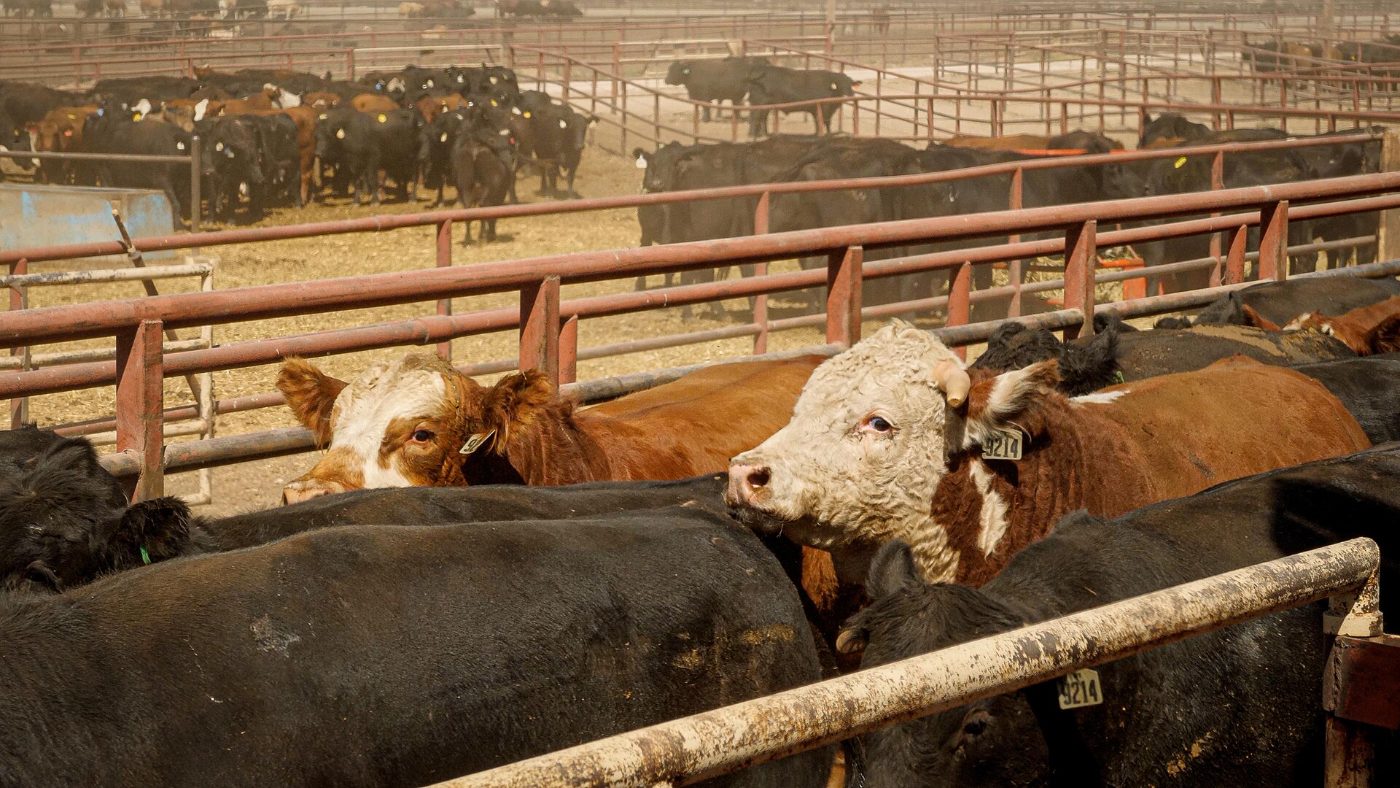
Lethbridge County has more cattle than any other municipality in Alberta: about 778,000 head of cattle and calves in the 2021 Census, up more than 40% in five years. Much of that is thanks to the feedlots clustered around Picture Butte and along the Oldman River. That’s why the area is often called Feedlot Alley.
What a feedlot is
A feedlot is a farm where cattle live in open-air pens and have their feed brought to them, instead of grazing on pasture. Alberta’s official term is a confined feeding operation, or CFO. Calves and yearlings come in from ranches, usually weighing 500 to 900 lb, and are fed a ration of grain (mostly barley here), silage and hay until they reach market weight of roughly 1,200 lb or more. A typical stay is around 100 days, though it varies from about two months to more than six.
How big?
- Alberta has about 155 feedlots that can hold 1,000 head or more, with room for nearly 1.5 million cattle at once.
- Around Lethbridge the largest operations are permitted to hold tens of thousands of head at a time.
- Because cattle come and go, a feedlot feeds more animals in a year than its capacity. A study for Lethbridge County found pens turn over about two and a half times a year.
- Alberta produces about 70% of Canada’s fed cattle, and has more than 70% of the country’s federally inspected beef processing capacity, much of it close by.
Why here?
It’s all close together. Irrigated fields grow the barley and corn silage. Ranches in the foothills and across the prairies supply the calves. The packing plants are a short haul away.
Manure, smell and the rules
A feedlot of any real size needs a permit. Under Alberta’s Agricultural Operation Practices Act, the Natural Resources Conservation Board (NRCB) issues the permits to build or expand a feedlot or its manure storage, and enforces them. Operators have to show they have enough land to spread manure without overloading the soil with nitrogen or salt, keep records, test their soil, and in many cases monitor groundwater.
Odour is the most common complaint, and the NRCB runs a 24-hour line for it. Most calls get a response within a business day. Manure that leaves a property gets a response within 24 hours.
The money
A study for Lethbridge County found feedlots bring in about $1.6 billion a year, around 80% of the county’s farm income. The trucks, feed mills, veterinarians, equipment dealers and processing plants that serve them add many more jobs across the region.
Learn more
See the feedlot section of our Farm Country guide. Sources: Alberta Regional Dashboard (2021 Census); Alberta Cattle Feeders’ Association (2025); Government of Alberta; Natural Resources Conservation Board; Western Producer (2020).
Top photo: Preston Keres, USDA, public domain.