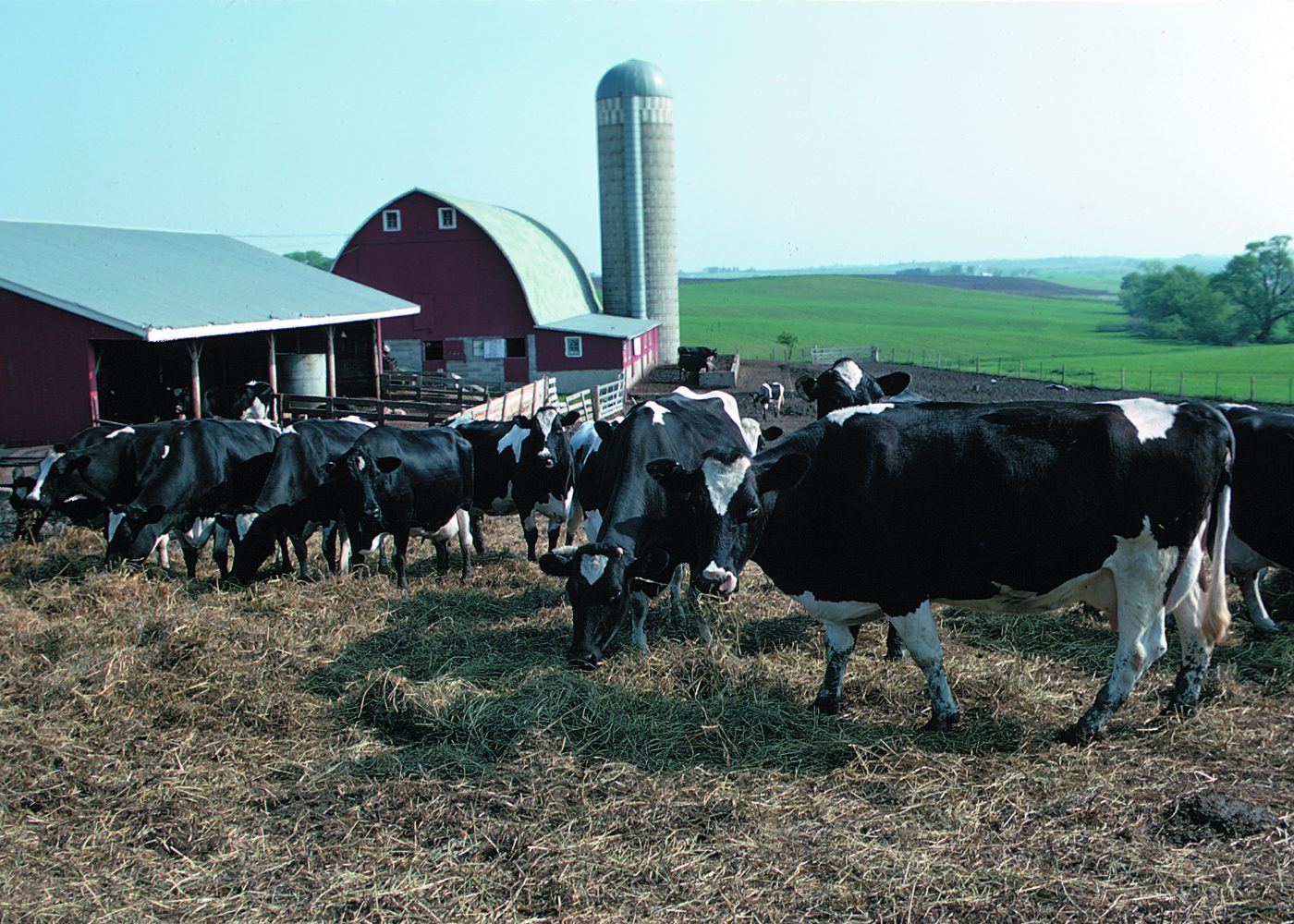
Those black-and-white cows you see in the fields and barns around Lethbridge County are Holsteins, the world’s most common dairy breed, and they make up about 95% of Alberta’s dairy herd. Lethbridge County alone is home to an estimated 9,000-plus dairy cows.
Alberta dairy by the numbers
- Alberta had 86,821 dairy cows on 393 dairy farms in the 2021 Census, about 9% of Canada’s dairy cows.
- In 2023-24, Alberta’s 468 licensed milk producers shipped about 838 million litres of milk, close to 9% of all the milk produced in Canada.
- Alberta is the third-largest milk-producing province.
- The average Alberta herd is roughly 125 to 150 cows.
A dairy’s day
Dairy farming doesn’t stop for weekends, holidays or blizzards. Cows are milked at least twice a day, every day of the year. Many farms use a milking parlour, where cows walk in for milking in groups. A growing number use robotic milkers: the cow walks into the robot when she’s ready, and a laser-guided arm attaches the milking cups. Robots now milk cows on almost one in five Canadian dairy farms.
A milk truck collects from each farm every day or two, and every load is tested for antibiotics before it goes anywhere. Milk from Alberta farms goes to dairy plants that make milk, cream, cheese, yogurt and ice cream.
Why here?
A dairy cow eats a lot of feed: alfalfa hay, corn silage and grain. The irrigated fields around Lethbridge grow all three, and that’s a big reason dairies have clustered in Lethbridge County. A county study estimated its dairy cows add about $32 million a year to local GDP.
What is supply management?
In Canada, milk is supply managed, along with eggs, chicken and turkey. The system rests on three tools:
- Production quotas: each farm can produce a set amount, so supply matches what Canadians buy.
- Farm prices set to cover the cost of producing milk.
- Limits on imports.
To start or grow a dairy, a farmer has to buy quota as well as cows, barns and land.
Learn more
See the dairy tile in our Farm Country guide. Sources: Statistics Canada (2021 Census); Alberta Milk (2023-24 annual report, 2022 infographic); Farm Products Council of Canada; University of Guelph (2023); Western Producer (2020).
Top photo: Lynn Betts, USDA NRCS, public domain.