Wildlife of the coulees: who lives around Lethbridge?
Gophers popping up in the spring, deer in the backyard, snakes sunning on the coulee slopes and owls hooting at night. Meet our wild neighbours, and learn how to share the coulees safely.
🐿 The “gopher”: Richardson’s ground squirrel
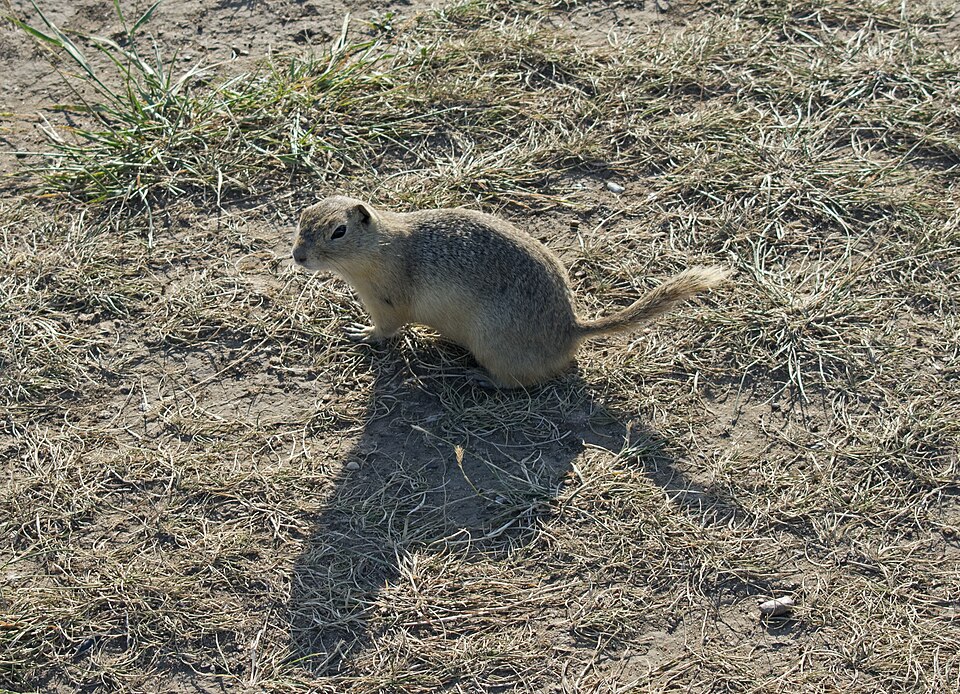
Everyone here calls them gophers, but their real name is Richardson’s ground squirrel. They live in big family colonies with tunnels underground.
- They’re one of the first signs of spring: they pop out of hibernation as early as late February. The males come out first, and the females about two weeks later.
- Adults head back underground by mid-summer, so they spend most of the year asleep!
- They stand straight up like a fence post to watch for hawks, badgers and coyotes, and give a sharp whistle to warn the others.
- They’re food for hawks, eagles, badgers, snakes and coyotes, so lots of prairie animals depend on them.
🐍 Prairie rattlesnakes
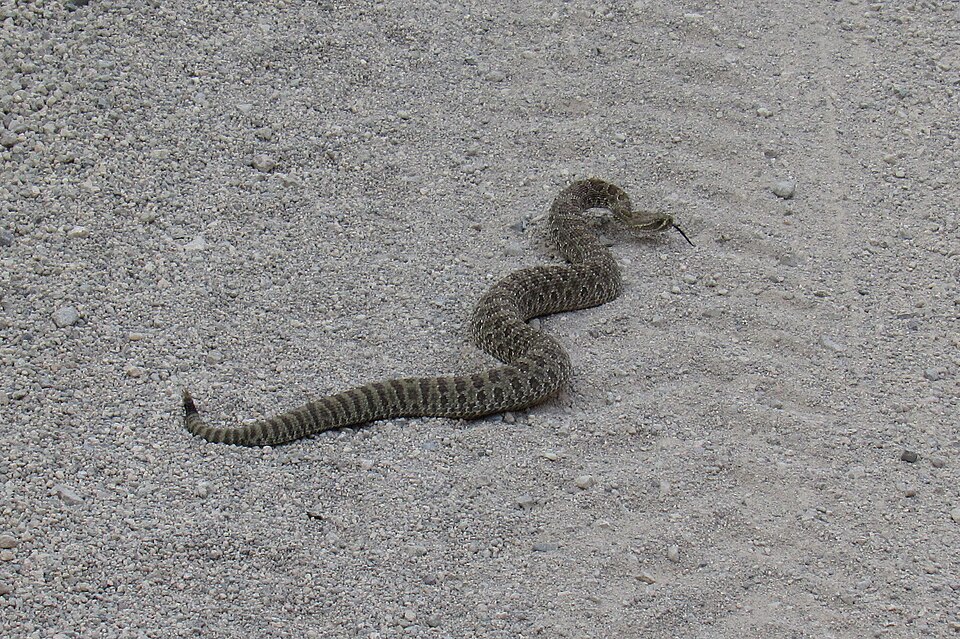
Lethbridge is near the northern edge of where prairie rattlesnakes live. They’re most often seen in West Lethbridge and the coulees, from spring to fall, and spend the winter together in underground dens.
- How to know one: a rattle on the tail, a wide triangle-shaped head, and blotches down the back.
- Rattlesnakes are venomous, but they are not aggressive. They rattle to say “back off!”, and most of the time they try to get away.
If someone is bitten: stay calm and go to the hospital right away. Don’t cut or suck the bite. With quick treatment, people almost always recover fully.
In Lethbridge, report a rattlesnake sighting to the Helen Schuler Nature Centre: 403-320-3064.
🐍 Rattlesnake dens: where they spend the winter
Prairie rattlesnakes can’t survive our winters above ground, so every fall they travel back to a den (scientists call it a hibernaculum): a crack, burrow or rocky hole on a coulee slope that reaches deep enough to stay above freezing all winter. Dens are fairly common in the coulees around Lethbridge.
- Many snakes share the same den, sometimes dozens, and often the same den for many years. Bull snakes and garter snakes sometimes share it too.
- In spring, usually April and May, the snakes come out and sun themselves near the den entrance before heading out to hunt for the summer. That’s when sightings near dens are most common.
- In fall, usually September and October, they return and gather near the den again before going underground.
- Rattlesnakes don’t lay eggs. Females give birth to live babies in late summer, and the young follow the adults’ scent trails back to the den.
🐍 Bull snakes: the big copycat
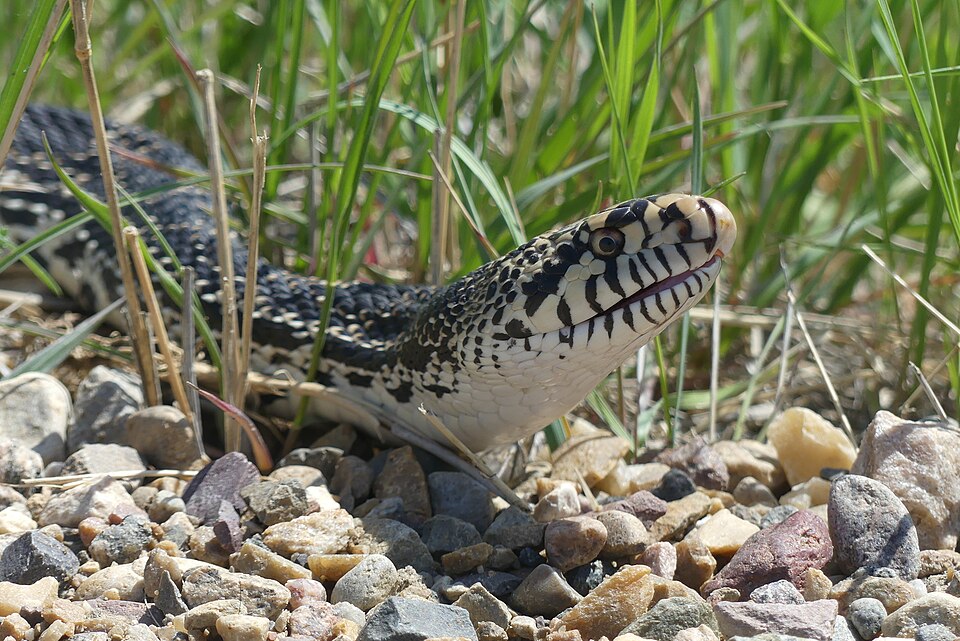
The bull snake is one of the biggest snakes in Alberta, up to about 2 metres long, and it is not venomous. But it’s a great actor! When it’s scared, it hisses loudly, puffs up and shakes its tail in the dry grass, so it can sound a lot like a rattlesnake. It has no rattle, and its head is narrower.
Bull snakes are a farmer’s friend: they eat mice and gophers.
🦌 Deer in the backyard
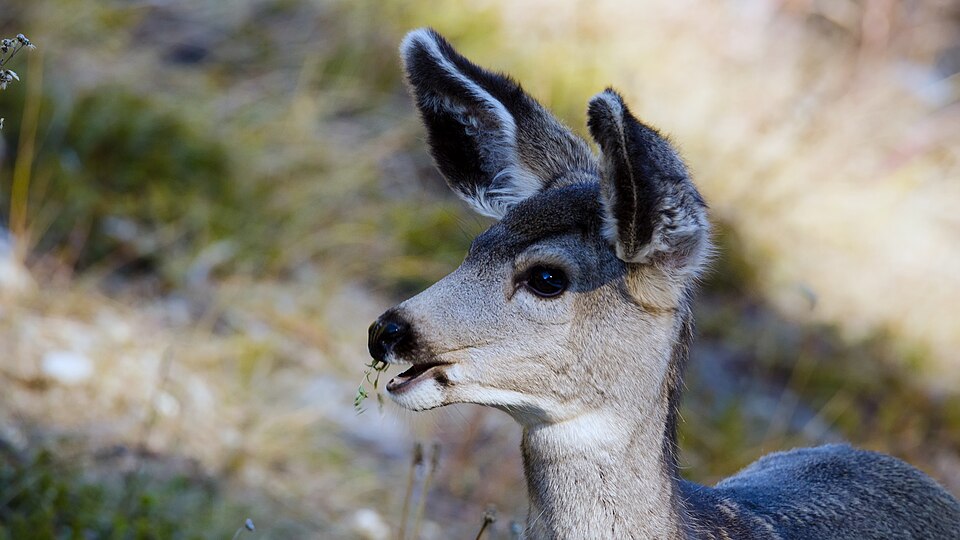
Two kinds of deer live in and around Lethbridge, and they often wander right into yards near the coulees:
- Mule deer: huge ears like a mule, and a small white tail with a black tip. When they run, they bounce on all four feet at once, like a pogo stick!
- White-tailed deer: when they run, they lift a big white tail like a flag.
More wild neighbours
🐺 Coyotes
Listen for their yips and howls at dusk. Smart and shy, but keep small pets close.
🦉 Great horned owls
Alberta’s provincial bird! Listen for their deep “hoo-hoo” on winter nights in the river valley.
🦔 Porcupines
Slow, shy tree climbers. They can’t shoot their quills, but don’t touch!
🐇 Jackrabbits and cottontails
White-tailed jackrabbits turn white in winter to hide in the snow.
🦅 Pelicans and eagles
Big white pelicans fish on the Oldman River in summer, and bald eagles visit along the river.
🦌 Pronghorn
On the open prairie east and south of town. The fastest land animal in North America!
🦉 Burrowing owls
Tiny owls that live in old gopher burrows on the prairie. They’re endangered, so every one is precious.
🐦 Magpies
Black-and-white, long-tailed and very clever. They’re here all year, even at minus 30.
Wildlife and the weather
Animals live by the weather and the seasons. Gophers and snakes hibernate through the cold. Deer grow thick winter coats. Pelicans fly south for the winter. A warm spring chinook can bring the first gophers out early. Keep a wildlife diary and compare it with the weather on our station!
✏ Try it yourself: be a wildlife watcher
- First gopher contest: every spring, write down the date you see the first gopher. Compare with the weather that week. Does a warm February bring them out sooner?
- Track detective: after a fresh snowfall, look for tracks in the yard or park. Deer tracks look like an upside-down heart. Rabbit tracks look like an exclamation mark (!) of two big and two small prints.
- Night listening: on a calm evening, stand outside with an adult and listen for 5 minutes. Owls? Coyotes? Write down what you hear.
- Visit the Helen Schuler Nature Centre in the river valley to learn about the animals that share our parks and backyards.
❓ Quick quiz
Guess first, then tap to see the answer.
What is the real name of the “gopher” we see in Lethbridge?
Richardson’s ground squirrel.
How can you tell a bull snake from a rattlesnake?
A bull snake has no rattle on its tail and a narrower head, though it may hiss and shake its tail to pretend.
You see a rattlesnake on the trail. What should you do?
Stop, back away slowly, and don’t run. Never touch it.
Which deer bounces on all four feet like a pogo stick?
The mule deer.
What is Alberta’s provincial bird?
The great horned owl.
🏫 For teachers and parents
- Ages: 4 to 12; links to Alberta animal life cycles and habitats topics.
- Rattlesnake safety is worth teaching to every child in West Lethbridge; the Helen Schuler Nature Centre offers programs and information (403-320-3064).
- Class phenology project: record the first gopher, first robin and first pelican each spring, alongside temperatures. Over years it becomes real climate data.
- Respect and the law: discuss why Alberta protects snakes and their dens.
- More ideas in the Teachers’ Corner.
More Earth Explorers
Sources: City of Lethbridge, Rattlesnake mitigation; Government of Alberta, Richardson’s ground squirrel management (Agri-News); Alberta Conservation Association, reptiles of Alberta.