Aurora Night Out: Planning a Northern Lights Trip
The forecast says the aurora might be out tonight. Now what? This page is the practical plan for a family aurora night from Lethbridge: how to read the forecast quickly, when and where to go, how to get a photo with your phone, and how to keep everyone safe and warm. For the full science and the live aurora check, see our Northern Lights over Lethbridge page.
Aurora chance tonight
A live check for Lethbridge, using NOAA’s aurora forecast and how dark it is here. It updates on its own.
Checking the aurora forecast…
On this page
The aurora in a nutshell
The sun is always sending out a stream of electrically charged particles called the solar wind. The Canadian Space Agency explains that Earth’s magnetic field acts as an invisible shield and steers most of it around our planet. Some of the particles are guided down toward the regions around the magnetic poles, where they collide with gases high in the upper atmosphere and make them glow, a bit like the gas in a neon sign. That glow is the aurora.
The aurora forms two rings, or ovals, around the north and south magnetic poles. On a quiet night the northern ring sits over northern Canada. When the sun sends a big burst our way, the ring grows and slides south, and that’s when we see it from southern Alberta: sometimes as a pale glow low in the north, and now and then as moving curtains right overhead.
Want the full story? Our Northern Lights over Lethbridge page has the live aurora check, what the colours mean, why Lethbridge does better than its map latitude suggests, a table of what each Kp number means here, and the full set of forecast tools. This page doesn’t repeat those. It’s the plan for the night itself.
Reading the forecast in four steps
Aurora forecasting is part science, part luck. The sun’s storms take a day or more to reach Earth, and their strength isn’t known for sure until they arrive. These four checks, from a few days out to the last minute, give you the best odds.
- A day or two ahead: the Kp forecast. The Kp index is a 0 to 9 scale of how disturbed Earth’s magnetic field is, worked out over three-hour blocks. NOAA’s Space Weather Prediction Center publishes a three-day Kp forecast. The higher the number, the farther south the aurora reaches; Kp 5 and up counts as a geomagnetic storm. The times are in Universal Time, so subtract 6 hours in summer and 7 in winter for Alberta. What each number means for us is on the Northern Lights page.
- The same day: the Canadian forecast. Natural Resources Canada’s Canadian Space Weather Forecast Centre gives a Canadian view, with forecasts for the polar, auroral and sub-auroral zones rated with levels such as quiet, unsettled and active. The more active the forecast, the better your chances.
- That evening: the cloud forecast. This is the one people forget. A great aurora night is useless under thick cloud. Check our forecast page and Environment and Climate Change Canada’s astronomy forecast, explained on our Dark Skies page.
- The last hour: real-time tools. NOAA’s 30-minute aurora forecast map shows the predicted oval about 30 to 90 minutes ahead, based on the solar wind measured by spacecraft upstream of Earth. AuroraWatch, run out of the University of Alberta, sends free email alerts: a yellow alert when it estimates a better than 50 percent chance of aurora and a red alert at better than 70 percent. Its measurements are for the Edmonton area, so treat them as a heads-up for us rather than a promise.
What it means for you: sign up for AuroraWatch alerts and check the Kp forecast when you hear about a solar storm in the news. Then, on the night, let the cloud forecast make the final call. If the numbers look good and the sky is clear, go and look. Strong displays can pop up with little warning and fade within half an hour.
Links to each tool: NOAA 3-day forecast · NOAA 30-minute aurora forecast · Space Weather Canada forecasts · AuroraWatch alerts
The best conditions
Clear sky
Especially to the north. A chinook arch often hangs over the mountains to the west while the northern and eastern sky stays clear, so look before you give up.
A dark moon
A bright moon doesn’t weaken the aurora, but it brightens the sky behind it and hides fainter displays. Nights around the new moon are best.
Around midnight
NOAA says displays are usually best within an hour or two of midnight. During strong storms the window opens earlier and stays open later.
Spring and fall
The Canadian Space Agency notes the aurora is most common around the spring and fall equinoxes, and easier to see in winter, when nights are long and dark. Around the June solstice our sky never gets fully dark.
A low northern horizon
Most of our displays sit low in the north. A rise in the prairie or a coulee rim with nothing in the way gives you the best view.
City lights behind you
Go north of town so the city glow is behind you while you face north. Even 15 to 30 minutes out makes a big difference.
The nights with the best aurora odds are often our coldest: clear, calm and dry. Check the overnight low and wind on our forecast page and dress for the wind chill, not just the temperature.
Where to go near Lethbridge
You need two things: a dark sky and an open view to the north. You don’t need to go far, but you do need to go somewhere you’re allowed to be.
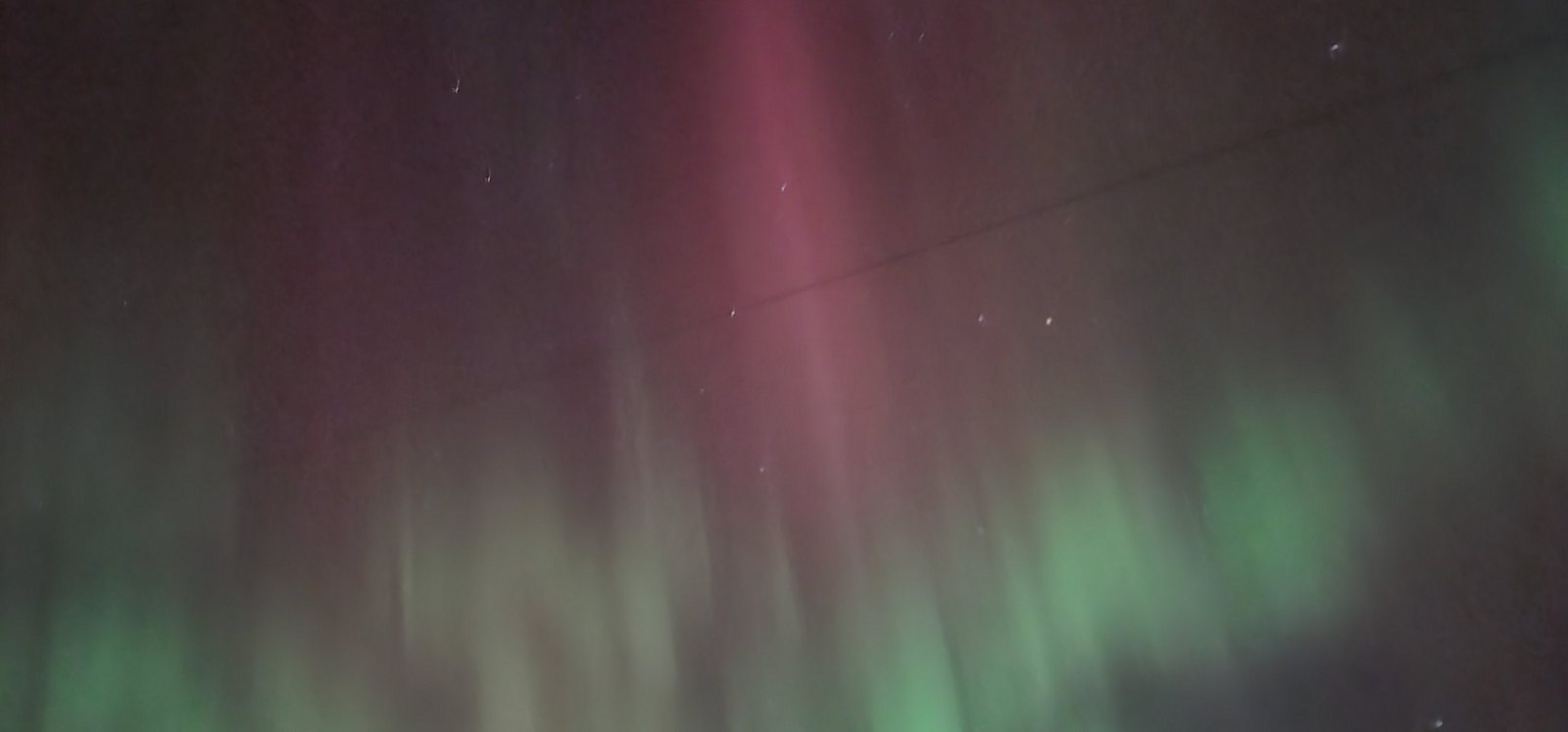
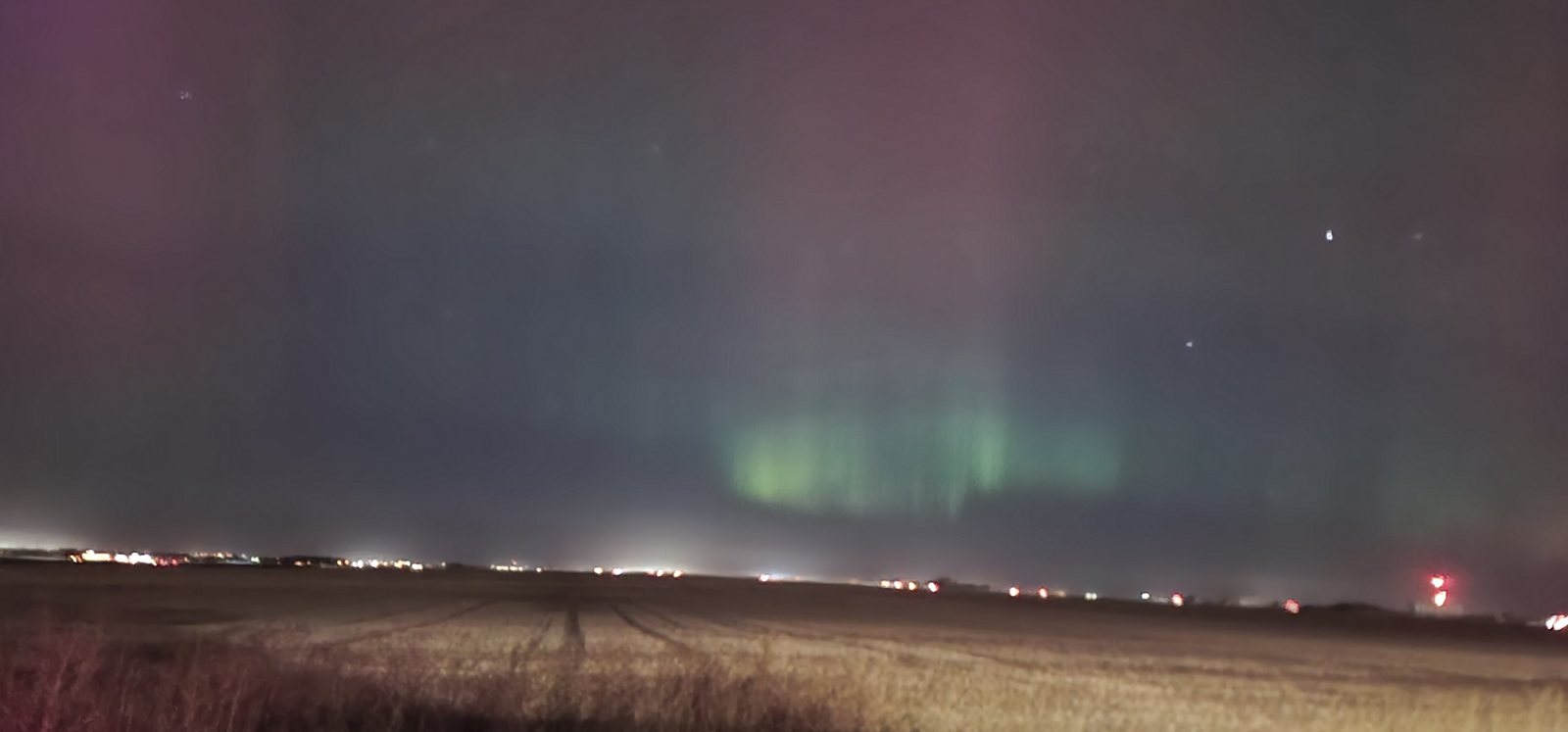
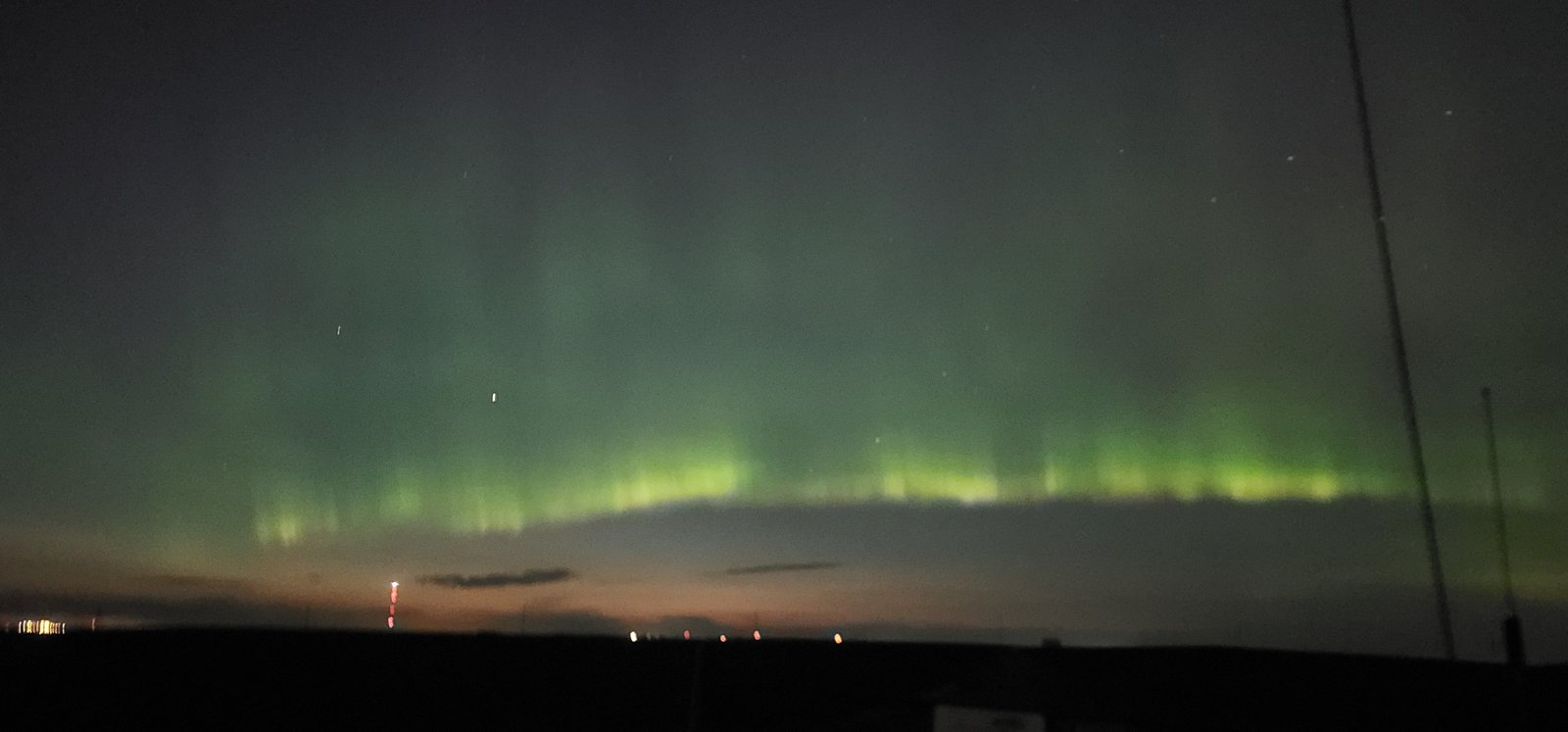
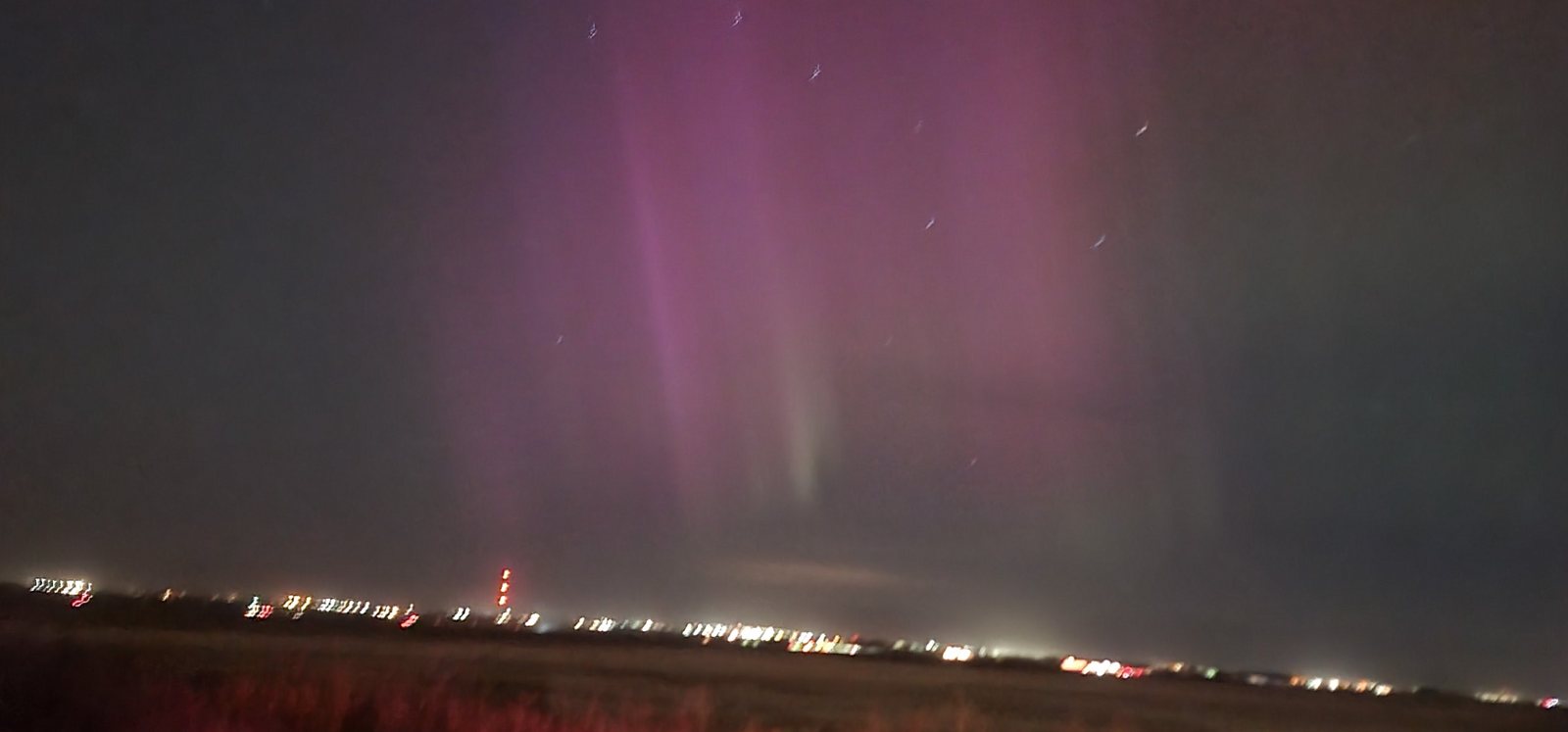
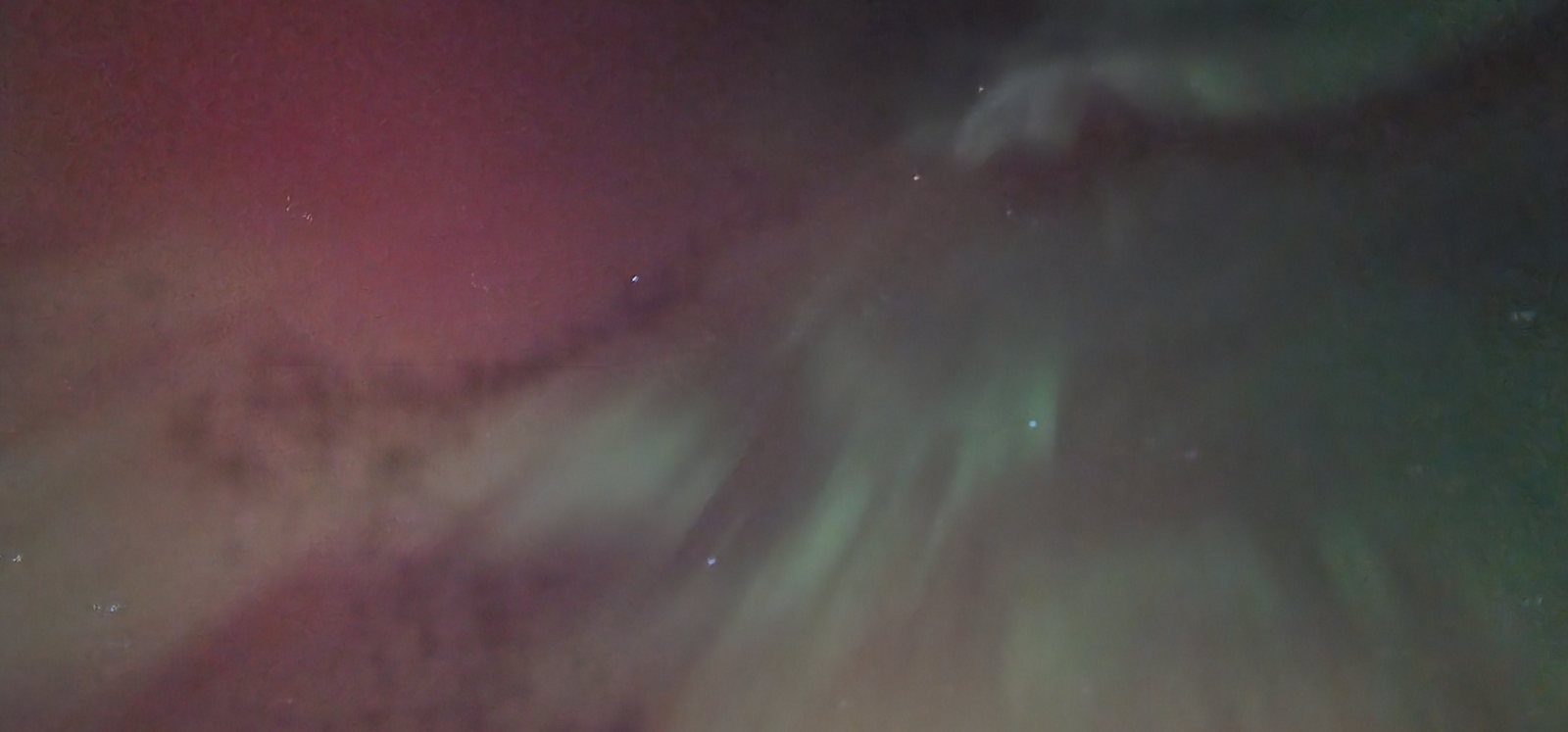
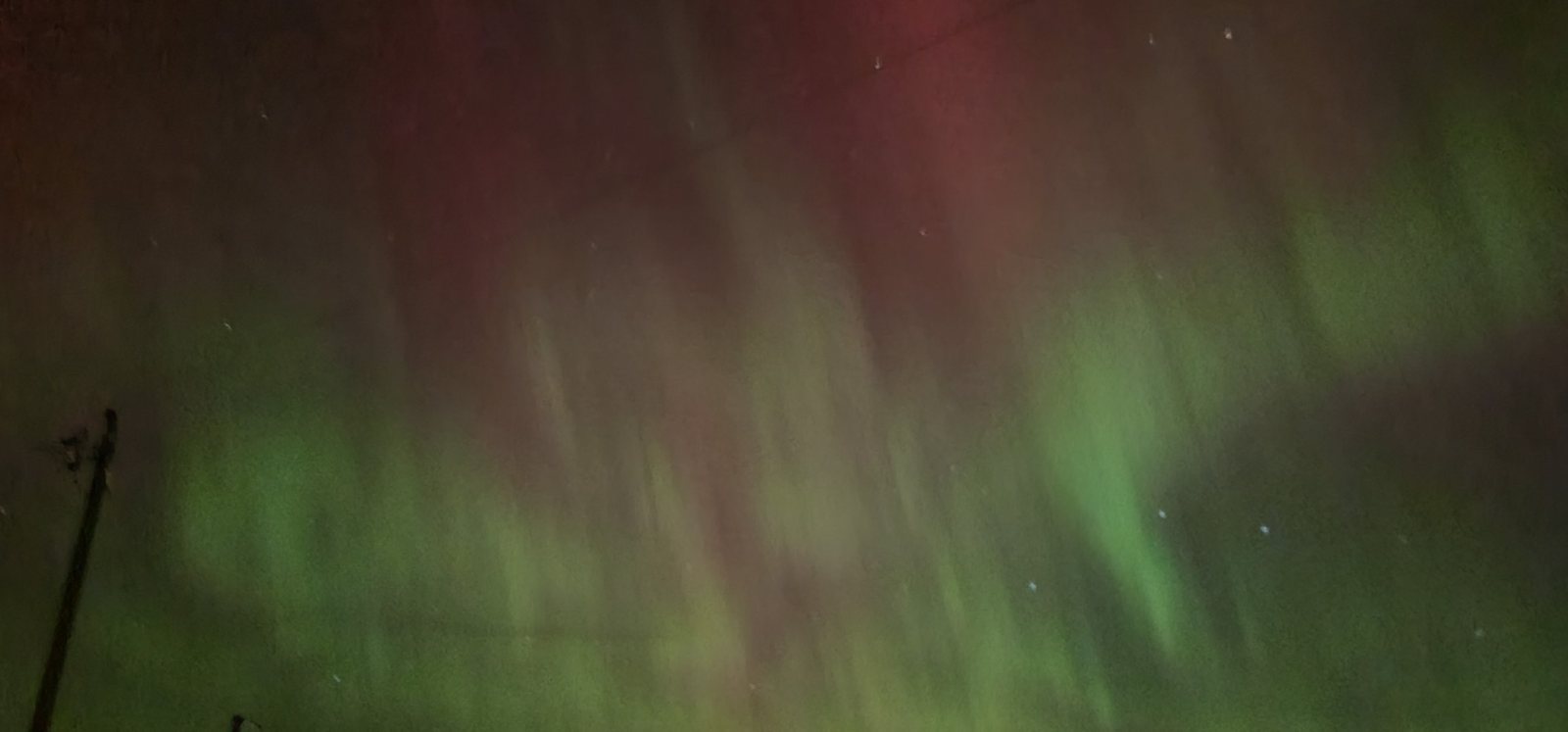
Gary saw the northern lights far more often as a kid, growing up in the country without all the street lights. Living in town, he sees them much less. On aurora nights, he slips out a few kilometres west of town and watches from there. If the grandkids are around, he takes them along; otherwise he goes on his own. Close to town, he says it’s all dark west of the YMCA in West Lethbridge, so you don’t have to go far.
- Use public places only. Provincial parks and recreation areas, public day-use areas and campgrounds are the right places. Never drive into fields, use field approaches or block gates without the landowner’s permission, even for a few minutes.
- Check the rules for after dark. Some day-use areas close at night. Camping is the easy way to be in a park legally after dark. Park Lake Provincial Park, about 17 km northwest of the city, has a campground that is open from mid-May into October (dates vary by year). Outside that season, check the park’s rules before you go after dark.
- Your own yard can work. During a strong storm the aurora can be bright enough to see from town. Turn off the porch light, step into the back yard and face north.
- Scout in daylight. Coulee edges, uneven ground and rattlesnake country are easier to judge before dark.
Our Dark spots close to home section has more ideas, and the Dark Skies and Stargazing page covers the darker destinations farther out, such as the Cypress Hills Dark-Sky Preserve and Waterton.
Photos with your phone
Your phone may see the aurora better than you do. In dim light our eyes switch to cells that are sensitive but colour-blind, so a faint aurora can look like a grey or whitish cloud. A phone gathers light for several seconds and shows the colour. If a photo of the northern sky comes out green, especially with rays or a curtain shape, the aurora is very likely there. On a very dark night a faint, even glow can also be natural airglow from the upper atmosphere, so look for shape and movement.
- Turn on night mode and turn off the flash. The flash only lights up the nearest few metres.
- Keep the phone perfectly still. Night mode takes a long exposure, often several seconds, and any wobble blurs it. Prop the phone on a fence post, your vehicle roof or a small tripod, or lean it against a backpack.
- Use the timer. A 3-second timer stops the shake from your finger pressing the button.
- Try a longer exposure. On a solid support, many phones offer a longer night-mode exposure, or a manual or pro mode where you can set the shutter time. Bright, fast-moving aurora needs shorter exposures; a faint glow needs longer ones.
- Put something in the picture. A grain elevator, a tree, a vehicle or a person standing very still makes the photo.
- Turn your screen brightness down so you don’t ruin your night vision, or everyone else’s.
For camera settings and more detail, see the photo tips on the Northern Lights page and Cold-night photography tips.
Cold drains phone batteries fast. Keep your phone in an inside pocket between shots, bring a charged battery pack, and never let the phone be the only light or the only way to call for help.
Staying safe and warm
Aurora nights are usually cold, late and dark, often on rural roads. A little planning keeps the night fun.
- Dress for standing still. Wear more layers than you think you need, a warm hat, mitts, a neck warmer and insulated boots. Children get cold faster than adults. See dressing in layers, wind chill and dressing kids for the cold.
- Bring the vehicle kit. Blankets, a thermos of something hot, snacks, a red light and a charged battery pack. Keep the fuel tank well up so you can warm up in the vehicle.
- Park safely. Pull completely off the road onto a wide, safe spot before you stop. Never park on a hill or curve, and don’t stand on the road to take photos.
- Be seen. Wear something reflective or carry a light when you’re near a road. Keep children close and away from traffic. Drivers don’t expect people standing in the dark.
- Watch for wildlife. Deer are common on rural roads at night.
- Tell someone where you’re going, especially in winter, and check road conditions on 511 Alberta.
- Don’t run the engine in a snow-blocked spot. If you warm up in the vehicle, make sure the exhaust pipe is clear of snow.
More on night driving is in Safety on dark rural roads.
For the kids
Where do the northern lights come from? They start at the sun, 150 million kilometres away. The sun puffs out tiny bits too small to see. Earth’s magnetism, the same thing that makes a compass needle point north, steers some of them toward the top of the world. When they crash into the air very high up, the air glows green and sometimes red or pink. The glow is about as high above the ground as the International Space Station flies.
Wonder: astronauts on the Space Station sometimes fly right through the height where the aurora glows. Do you think they look down on it, across at it, or up at it?
Try this: on an aurora night, keep an aurora log. Write the date, the time, what colours you saw by eye, what colours the phone saw, and which way it moved. Draw a picture of the shapes: a glow, an arc, rays like searchlights, or curtains.
Aurora and radio
The same storms that light the sky affect radio
The solar storms that bring us the aurora also stir up the upper atmosphere that long-distance shortwave (HF) radio signals bounce off. NOAA’s space weather scales say a moderate geomagnetic storm can make HF radio fade at higher latitudes, a strong one can make it come and go, and in the most extreme storms HF radio may be impossible in many areas for a day or two. Amateur radio operators watch the same Kp forecasts as aurora chasers, and some even bounce signals off the aurora itself.
Gary’s ham radio site has more on radio and space weather: VE6DOK.net.
Sources
- Canadian Space Agency, What are the northern lights? (solar wind, magnetic shield, the two ovals, equinoxes, winter viewing, height similar to the Space Station): asc-csa.gc.ca
- NOAA Space Weather Prediction Center, 3-Day Forecast: spaceweather.gov
- NOAA Space Weather Prediction Center, Aurora 30-Minute Forecast: spaceweather.gov
- NOAA Space Weather Prediction Center, Planetary K-index (0 to 9, three-hour blocks, 5 and up is a storm): spaceweather.gov
- NOAA Space Weather Prediction Center, Tips on viewing the aurora (best within an hour or two of midnight; moon; equinoxes): spaceweather.gov
- NOAA Space Weather Prediction Center, NOAA Space Weather Scales (HF radio effects of G2 to G5 storms): spaceweather.gov
- Natural Resources Canada, Canadian Space Weather Forecast Centre forecasts: spaceweather.gc.ca
- University of Alberta, Institute for Space Science, Exploration and Technology, AuroraWatch (Edmonton-area monitor; yellow above 50 percent and red above 70 percent): ualberta.ca; alert sign-up: aurorawatch.ca
- Alberta Parks, Park Lake Provincial Park campground (17 km northwest of Lethbridge): albertaparks.ca
- Government of Alberta, 511 Alberta road conditions: 511.alberta.ca
- Phone photo steps are general practice, matched to the tips on our Northern Lights page.